
Plan a New York-Side Niagara Falls Visit Without Wasting the Day
Start at public viewpoints, group Goat Island stops, then add one or two ticketed waterfall experiences as time and energy allow.
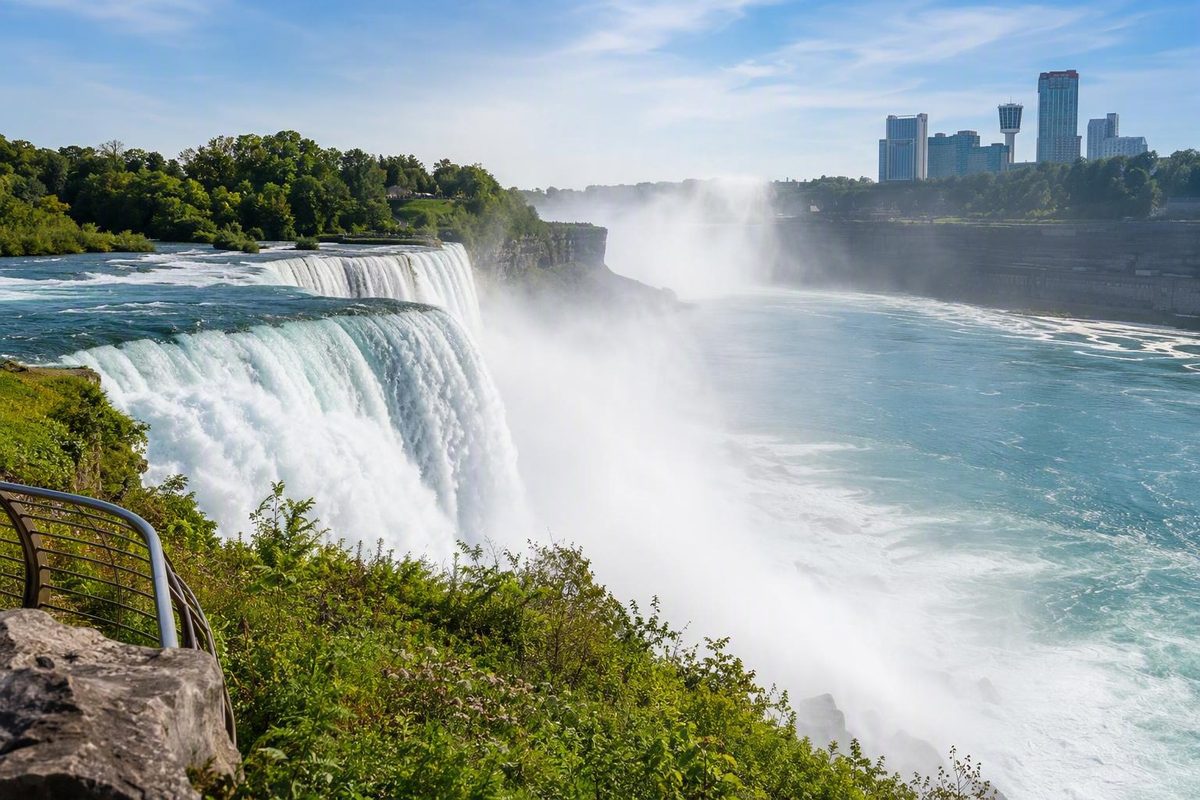
A first visit to Niagara Falls, New York, works best when Niagara Falls State Park is the center of the day—not one stop in a long regional checklist. Begin with the public viewpoints, group the Goat Island stops together, and add no more than one or two ticketed waterfall experiences unless you have ample time and energy.
The park is open year-round and free to enter on foot, although parking, transportation, tours, and individual attractions may cost extra. It covers approximately 400 acres and reports more than 15 miles of hiking trails. The Observation Tower provides a panorama of all three waterfalls, while the Niagara Scenic Trolley can help visitors move among park stops when it is operating. Check the official Niagara Falls State Park attraction information before visiting.
Planning note — reviewed August 20, 2026: This guide provides a route framework, not live operational information. Current prices, attraction schedules, ticket procedures, parking rules, accessibility conditions, transportation service, weather closures, illumination times, and fireworks dates were not independently verified for a specific travel date. Confirm those details with the park and individual operators immediately before departure.
You do not need to cross into Canada to build a complete trip. The New York side combines close waterfall access, island walks, upper-river rapids, gorge scenery, history, and indoor alternatives. Canada provides another perspective, but it is an optional addition rather than a requirement.
Start with the essential New York-side experiences
Niagara Falls comprises three waterfalls: American Falls, Bridal Veil Falls, and Horseshoe Falls. American Falls and Bridal Veil Falls are on the United States side, while Horseshoe Falls straddles the international border. A New York-side guide explains this three-waterfall geography.
For most first-time visitors, the core route has seven parts:
- Prospect Point and the Observation Tower area
- Goat Island
- Luna Island
- Terrapin Point
- Three Sisters Islands
- Cave of the Winds
- Maid of the Mist
These places are not interchangeable. Each provides a different view or type of experience.
Prospect Point is a logical starting place for looking toward American Falls. Beginning here helps you understand the overall setting before moving to closer viewpoints.
The Observation Tower adds elevation and the broadest cited New York-side panorama of the three waterfalls. Access conditions may differ from those for the surrounding public viewpoint, so verify current operating and ticket arrangements.
Goat Island is the organizing spine of the New York-side visit. Its paths connect Luna Island, Cave of the Winds, Terrapin Point, and the route toward Three Sisters Islands. Grouping these stops together reduces unnecessary backtracking.
Luna Island lies between American Falls and Bridal Veil Falls. It provides close perspectives on both and makes their position relative to one another much easier to understand.
Terrapin Point, on Goat Island, brings you near Horseshoe Falls from the New York side. It does not duplicate Luna Island: the waterfall, angle, surrounding river, and sound are different.
Three Sisters Islands is primarily an upper Niagara River stop. Its appeal is watching the rapids before the river reaches the falls, rather than seeing a broad frontal panorama. The official destination itinerary distinguishes Luna Island, Terrapin Point, and Three Sisters Islands by these contrasting perspectives. Compare the destination’s descriptions of the three viewpoints.
Cave of the Winds uses an elevator, gorge walkways, and stairs to bring visitors into the mist near Bridal Veil Falls. The exact route or deck configuration can vary by season.
Maid of the Mist provides a boat-level perspective. It departs from the American side, passes the American Falls and Bridal Veil Falls area, and proceeds toward Horseshoe Falls.
A simple decision rule keeps the day manageable:
- Start with the public park viewpoints.
- Add Maid of the Mist if a boat-level approach toward Horseshoe Falls matters most.
- Add Cave of the Winds if close proximity to Bridal Veil Falls is the priority.
- Choose both only if they are operating and your time, budget, mobility, and tolerance for wet clothing permit.
The common planning mistake is treating every named attraction as compulsory. Prospect Point, Luna Island, Terrapin Point, and Three Sisters Islands already provide four meaningfully different experiences. Adding one signature attraction can produce a satisfying first visit without making the day feel like a race.
Choose viewpoints based on which waterfall you want to see
There is no objectively superior Niagara Falls viewpoint. The right combination depends on whether you want a broad composition, a close brink perspective, an elevated panorama, or views of the river before it descends.
| Location | Principal view or experience | Cost status | Route character | Nearby stops |
|---|---|---|---|---|
| Prospect Point | Direct view toward American Falls | Public park viewpoint* | Central park stop; total effort depends on where you arrive | Observation Tower, Maid of the Mist area |
| Observation Tower | Elevated panorama including all three waterfalls | Operating or ticket conditions may apply | Central-area stop; an elevator at one point does not establish complete-route accessibility | Prospect Point, Maid of the Mist area |
| Luna Island | Close perspectives on American Falls and Bridal Veil Falls | Public park viewpoint* | Goat Island connection requiring additional walking | Cave of the Winds, Goat Island paths |
| Terrapin Point | Close New York-side perspective near Horseshoe Falls | Public park viewpoint* | Goat Island stop requiring additional walking | Three Sisters Islands |
| Three Sisters Islands | Upper Niagara River rapids rather than a frontal falls view | Public park area* | Farther extension of the Goat Island route | Terrapin Point, Goat Island paths |
| Goat Island paths | Changing views of rapids, islands, and brink areas | Public park paths* | Distance varies substantially according to the stops included | Luna Island, Cave of the Winds, Terrapin Point, Three Sisters Islands |
| Maid of the Mist | Water-level route toward Horseshoe Falls | Ticketed attraction† | Boarding, standing, and walking conditions must be verified | Prospect Point, Observation Tower |
| Cave of the Winds | Gorge-level experience beside Bridal Veil Falls | Ticketed attraction† | Elevator plus walkways and stairs; configuration varies seasonally | Luna Island, Goat Island |
* Park admission and public viewing are free, but parking, transportation, tours, and optional attractions may cost extra. † Maid of the Mist and Cave of the Winds are optional attractions rather than part of free park admission. A New York-side visit account makes the same distinction between free admission and added costs.
The route descriptions above are broad planning distinctions, not accessibility ratings. Effort depends on the arrival point, open paths, weather, pace, and the number of island stops included. Anyone with limited mobility should verify the complete route rather than relying on a single elevator or general effort label.
For American Falls, begin at Prospect Point. This provides enough distance to see the waterfall as a whole. Add Luna Island when you want to exchange that broad view for proximity.
For Bridal Veil Falls, Luna Island explains its position beside American Falls. Cave of the Winds changes the experience from observation to close contact with the mist zone.
For Horseshoe Falls, use Terrapin Point for the close New York-side perspective. Maid of the Mist adds a lower approach from the river.
For all three waterfalls in one panorama, prioritize the Observation Tower.
For rapids and the approach to the falls, walk to Three Sisters Islands. Do not substitute it for Terrapin Point if Horseshoe Falls is your priority; the two stops reveal different stages of the river.
A practical Goat Island sequence is Luna Island, Cave of the Winds if scheduled, Terrapin Point, and Three Sisters Islands. The direction can be reversed. Grouping the stops is more important than following a rigid order.
Compare Maid of the Mist and Cave of the Winds
Maid of the Mist and Cave of the Winds are complementary rather than competing versions of the same attraction. One places you on the river; the other places you beside a waterfall.
| Consideration | Maid of the Mist | Cave of the Winds |
|---|---|---|
| Experience type | Boat trip | Elevator descent followed by gorge walkways and stairs |
| Waterfall focus | Passes the American and Bridal Veil Falls area before proceeding toward Horseshoe Falls | Focuses on the area beside Bridal Veil Falls |
| Perspective | Moving, river-level approach | Close-range views from walkways and decks |
| Spray | Expect substantial spray; exposed clothing, shoes, bags, and electronics can get wet | Expect substantial spray near the waterfall; intensity varies by deck and conditions |
| Walking and stairs | Less trail-style walking, but boarding, standing, and vessel movement still matter | Greater reliance on stairs and walkways; surfaces can be wet or slippery |
| Seasonality | Boat operations are seasonal | The available gorge route or deck configuration can change by season |
| Tickets | Ticketed; verify current prices, sales procedures, boarding rules, and schedule | Ticketed; verify current prices, entry procedures, open decks, and seasonal format |
| Better fit for | Visitors prioritizing a boat approach toward Horseshoe Falls | Visitors prioritizing proximity to Bridal Veil Falls |
The comparison reflects documented spray, stairs, walkways, and seasonal variation, but it does not establish current accessibility or operations. Review an American-side comparison of the two experiences before deciding.
Choose Maid of the Mist when the boat perspective matters most
Maid of the Mist begins on the American side and moves past American Falls and Bridal Veil Falls before approaching Horseshoe Falls. Protective gear does not guarantee that exposed clothing, shoes, bags, or electronics will stay dry. A detailed route account describes both the waterfall sequence and the likelihood of becoming soaked.
Choose it if you want the views to change while you move.
Do not assume that a boat tour requires no physical planning. Verify the current route to the landing, elevator status, boarding process, standing conditions, and accommodations for wheelchairs or strollers. An elevator on part of the route does not prove that the complete experience is barrier-free.
Choose Cave of the Winds for proximity to Bridal Veil Falls
Cave of the Winds brings visitors into the mist near Bridal Veil Falls through an elevator, walkways, and stairs. Wet or potentially slippery surfaces are part of the documented experience, and the available decks or gorge route may change by season.
Choose it if standing beside a waterfall is more appealing than approaching by boat. It can feel more physically direct because you move through the gorge environment on foot rather than remaining on a vessel.
Before buying a ticket, verify the current stair requirements, open decks, elevator operation, and walkway configuration. Travelers with balance concerns, limited mobility, small children, or strollers should seek attraction-specific information rather than relying on a general accessibility label.
Choose both only for the contrast
Doing both makes sense when you have a full day and want two clearly different perspectives:
- Maid of the Mist: moving boat-level approach toward Horseshoe Falls
- Cave of the Winds: close walkway experience beside Bridal Veil Falls
Allow a flexible buffer between them. Quick-drying layers, water protection for electronics, and spare socks are more useful than an inflexible minute-by-minute schedule.
Current prices, operating dates, entry procedures, and accessibility arrangements can change. Use the official park attraction information as a starting point, then confirm details with the individual operator shortly before departure. Do not build the day around an old price list or third-party ticket rule.
Use a route that fits the time you actually have
The strongest Niagara Falls itinerary is modular. It preserves the core views when time shrinks and adds distant stops only when the day remains on schedule.
A four-hour New York-side route
Four hours is enough for an introduction, but not necessarily for every attraction. Use this sequence:
- Start at Prospect Point. See American Falls and orient yourself to the park.
- Visit the Observation Tower area. Add the elevated panorama if access is available.
- Move to Goat Island.
- Walk to Luna Island. See American Falls and Bridal Veil Falls from close range.
- Continue to Terrapin Point. Add the New York-side Horseshoe Falls perspective.
- Complete one paid experience. Choose Maid of the Mist or Cave of the Winds if operating.
- Leave Three Sisters Islands optional. Add it only if your group has sufficient time and energy.
For a free-focused visit, replace the paid attraction with Three Sisters Islands. If getting close to the falls is the priority, keep the ticketed experience and shorten the island walking.
Four hours becomes tight once parking, ticket collection, queues, meals, and individual walking speed are included. Treat this as a route hierarchy rather than a guarantee.
A one-day Niagara Falls itinerary
Start early and check whether either signature attraction is using timed entry or another date-specific procedure. The day should remain flexible enough to absorb waits and seasonal changes.
Morning
- Confirm Cave of the Winds and Maid of the Mist operations.
- Secure any required entry time.
- Walk to Luna Island.
- Complete Cave of the Winds if the timing works.
- Continue to Terrapin Point.
Midday
- Take a meal and drying break.
- Visit Three Sisters Islands if the group is comfortable with more walking.
- Return toward the central park area on foot or by trolley when available.
Afternoon
- Complete Maid of the Mist.
- Visit Prospect Point and the Observation Tower area before or after the boat, depending on queues.
- Use remaining time for the Welcome Center or a slower repeat viewpoint.
Evening
- Eat without adding a distant regional journey.
- Return for the illuminated falls.
- Check fireworks separately rather than assuming they accompany illumination.
The greatest scheduling risk is placing Cave of the Winds and Maid of the Mist back-to-back with no buffer. Both can involve waits, and both may leave you wet. A delay at the first attraction can then affect meals, transportation, and the rest of the park.
If the day runs late, remove stops in this order:
- Distant gorge hiking
- Regional detours
- Indoor museums that are not central to your interests
- Three Sisters Islands, if you have already spent time along the upper river
Preserve Prospect Point, Luna Island, Terrapin Point, and whichever paid experience matters most. Those stops provide the clearest first-visit overview.
A two-day Niagara Falls itinerary
Use the first day for the waterfalls themselves:
- Prospect Point and the Observation Tower area
- Luna Island
- Cave of the Winds
- Terrapin Point
- Three Sisters Islands
- Maid of the Mist
- Evening illumination
Use the second day to follow one theme rather than collecting disconnected attractions.
For hiking: choose Whirlpool State Park or Devil’s Hole State Park.
For an indoor day: combine the Aquarium of Niagara and Great Lakes 360 with another nearby indoor attraction.
For history: visit the Niagara Falls Underground Railroad Heritage Center, then consider Old Fort Niagara.
For science and engineering: visit Power Vista in Lewiston.
For a river outing: spend time in Lewiston, potentially adding a river-rapids activity.
For a broader regional day: consider Youngstown, Old Fort Niagara, or Lockport, recognizing that these are not central-park stops.
Two days should feel less compressed, not twice as full. Day two is most useful when it provides contrast with the mist, crowds, and continuous walking of the first day.
Build a free or lower-cost sightseeing day
It is possible to see Niagara Falls from New York without buying an attraction ticket. It is not accurate, however, to describe every Niagara Falls outing as completely free.
Walking into Niagara Falls State Park and using its public viewing areas are free. Depending on how you arrive and what you add, you may still pay for:
- Parking
- Public or private transportation
- Maid of the Mist
- Cave of the Winds
- Guided tours
- Food and drinks
- Optional museums or activities
A free-focused park route can include:
- Prospect Point
- Goat Island
- Luna Island
- Terrapin Point
- Three Sisters Islands
- Public walking paths between them
This sequence covers perspectives on American Falls, Bridal Veil Falls, Horseshoe Falls, and the upper Niagara River without requiring a ticketed waterfall attraction. It also leaves you free to repeat a viewpoint, stop for photographs, or shorten the route without losing prepaid time.
Tripadvisor’s free-entry filter also lists Whirlpool State Park as an outdoor option. That classification does not establish that transportation, tours, parking, or every associated activity is free, and the platform’s ordering is not an objective quality ranking. See the filtered Niagara Falls listings for context.
Three budget tiers are more useful than an unverified dollar estimate:
Free-viewpoint day
Use public viewpoints and walking paths only. Budget separately for arrival, parking or transportation, food, and any optional purchases.
This tier suits visitors who primarily want to see the waterfalls, groups that need a flexible pace, and repeat visitors who do not need a packaged experience.
Viewpoints plus one signature attraction
Combine the public park route with either Maid of the Mist or Cave of the Winds.
This is often the most manageable first-visit structure because it preserves the range of park scenery while adding one experience that cannot be reproduced from an overlook.
Both signature experiences
Complete the public viewpoints, Maid of the Mist, and Cave of the Winds.
This tier provides the widest variety in the central park, but it also creates the greatest exposure to ticket costs, queues, wet clothing, and schedule pressure. It is better suited to a full day than a short visit.
A budget plan should include a time budget. A low-cost regional detour can still be poor value if it displaces the waterfall views you came to see.
Add Niagara Gorge walks only at the right difficulty level
Walking between central park viewpoints is not the same as hiking at river level in the Niagara Gorge. The scenery may appear connected on a map, but the physical demands are different.
Easy park walking and upper-rim viewpoints
The main state park route uses developed paths connecting central overlooks and Goat Island attractions. Distances accumulate, but this is sightseeing walking rather than a river-level gorge descent. Visitors can shorten it by omitting Three Sisters Islands, using the trolley when operating, or dividing Goat Island and Prospect Point into separate blocks.
Upper-rim areas at Whirlpool State Park provide views of the gorge and Niagara River rapids without requiring a descent to the water. The route toward Devil’s Hole is presented as the less strenuous alternative for overlooks and birdwatching.
“Less strenuous” does not mean fully accessible. Grades, surfaces, weather exposure, and current route conditions still require verification.
Gorge-level hiking
The official itinerary calls for sturdy footwear and contrasts this descent with an easier upper-rim option toward Devil’s Hole. Review the park’s gorge-walking guidance before choosing a route.
Before adding the gorge-level hike, consider:
- Whether everyone can complete the return climb
- The group’s remaining energy after the central park route
- Current weather and daylight
- Posted warnings or route restrictions
- Whether footwear provides secure traction
- Whether anyone is already uncomfortable in wet clothing or shoes
For a two-day trip, the gorge is usually better placed on the second day. This prevents a substantial stair climb from undermining the core waterfall route.
Whirlpool Jet Boat is not a waterfall tour
Whirlpool Jet Boat tours depart from Lewiston and focus on Niagara River rapids. They do not replace Maid of the Mist and should not be booked under the assumption that they provide close waterfall views.
This is a regional outing rather than a central park activity. Account for the separate journey to Lewiston and verify the current ride formats, restrictions, prices, and operating conditions before committing.
Niagara walking and gorge safety
Cave of the Winds and gorge routes can involve substantial spray, wet or slippery surfaces, stairs, and demanding climbs. The documented Whirlpool river-edge route requires more than 400 steps.
- Wear secure footwear suited to wet surfaces and stairs.
- Protect phones, cameras, medication, and other water-sensitive items.
- Carry a dry layer if wet clothing could become uncomfortable.
- Treat upper-rim walking and river-edge hiking as different difficulty levels.
- Follow gates, posted warnings, and any current route restrictions.
- Turn back if footing, fatigue, or conditions exceed your group’s abilities.
Choose indoor, family, history, and regional alternatives
Waterfall viewpoints should remain the first priority for most first-time visitors, but indoor and regional attractions become useful during poor weather, fatigue, or a two-day stay. Organizing them geographically prevents a supposedly nearby addition from consuming much of the day.
Walkable or near-park additions
Aquarium of Niagara is located a few blocks from Niagara Falls State Park and can serve as an indoor or family-oriented alternative.
Great Lakes 360, associated with the aquarium area, is another option for visitors interested in regional aquatic environments. Check current admission arrangements and operating hours rather than assuming that the two facilities follow identical rules.
Niagara Falls Underground Railroad Heritage Center interprets the area’s role as a border-crossing point for Freedom Seekers traveling toward Canada. It adds human history to a trip otherwise dominated by natural scenery.
The aquarium, Great Lakes 360, Heritage Center, and several longer-stay options are included in the park’s suggested itineraries. Use the official itinerary as a starting point for organizing these additions.
Old Falls Street may provide public space, art, dining, or scheduled activity near the park. Its programming varies, so treat it as a convenient connector rather than a guaranteed event venue.
Public art and cultural spaces can fill a short gap, but they should not displace a booked waterfall attraction unless they are a primary interest.
Niagara Gorge additions
Whirlpool State Park and Devil’s Hole State Park are the main outdoor additions for river rapids, gorge overlooks, and hiking. They belong in the same geographical part of the itinerary, but that does not mean both must be completed.
Choose one according to energy and current conditions. An upper-rim walk is easier to integrate into a sightseeing day than a river-level route involving a substantial stair climb.
Lewiston and Youngstown detours
Power Vista in Lewiston is described as a free, self-paced attraction with exhibits about electricity and power generation. Whirlpool Jet Boat tours also leave from Lewiston but focus on river rapids rather than waterfall viewing. The Underground Railroad Heritage Center, Power Vista, aquarium, and Lewiston activities are outlined in a broader American-side activity guide. Compare these options before choosing a second-day theme.
Old Fort Niagara, in the Youngstown area, is a regional history detour with historic fort sites and interpretive programming. It is not in the central falls area, so give it a dedicated block instead of squeezing it between Goat Island stops. A regional American-side guide describes the fort and other Niagara County additions.
Farther regional options
Lockport may suit visitors with additional time and a specific interest in Erie Canal history or related attractions. It should not be treated as an extension of the state park walking route.
Other Niagara County communities, wineries, and seasonal outdoor attractions also belong in a broader regional itinerary. Trying to add them to a four-hour or tightly scheduled one-day visit usually weakens the main Niagara Falls experience.
Local parks, arts, events, and sports
Hyde Park, Old Falls Street, public art, seasonal concerts, festivals, and local sports can add value for repeat visitors or travelers staying overnight. Their schedules are dynamic. The City of Niagara Falls links to information about these places and events, including separate illumination and fireworks information. Check the city’s attraction page for current listings.
Do not assume that a concert, festival, game, or fireworks display will occur simply because it appears in a general destination guide. Verify the date, location, admission terms, and weather policy.
Plan for crowds, seasons, transportation, and evening conditions
Niagara Falls State Park is open year-round, but individual boats, decks, gorge experiences, trolley service, shuttles, festivals, and fireworks can follow separate schedules.
Expect different experiences by season
Warmer periods may provide the broadest selection of outdoor and water-based attractions, but they can also bring heavier demand and crowded paths.
During cooler or shoulder seasons, boat service and deck configurations may change. Cave of the Winds may operate in a different form from its peak-season experience, so photographs from another month may not represent what is available on your date.
In winter, the falls, mist, ice, and river remain the main attraction, but some experiences may be modified or unavailable. Build the day around verified openings rather than assuming that a summer itinerary transfers directly to winter.
Use walking as the foundation
The central park is best understood on foot. Walking reveals the river, islands, changing angles, and transitions between the waterfalls.
The Niagara Scenic Trolley can reduce some walking and connect park stops when operating. Treat it as a supplement rather than the only way the itinerary functions. Verify its current route, boarding points, fare, hours, and seasonal schedule.
For farther areas, the Discover Niagara Shuttle and Reddy Bikeshare may be useful. Confirm current service areas, schedules, fares, app requirements, and availability before relying on either one.
Cycling introduces weather, traffic, parking, app access, and equipment considerations. A shuttle may help with regional movement but should not be assumed to serve every desired stop throughout the year.
Plan cautiously for limited mobility
Selected Niagara Falls sites have elevators, and the trolley may reduce walking. Those facts do not demonstrate that every path, boarding process, attraction, or viewpoint is wheelchair- or stroller-accessible.
Before visiting, ask specific questions:
- Is the relevant elevator operating?
- Is there step-free access from parking or the trolley stop?
- Are grades, thresholds, and surfaces documented?
- Does the current attraction configuration require stairs?
- Can a wheelchair or stroller remain on the complete route?
- Are accessible restrooms and seating available near the intended stops?
A limited-mobility itinerary should prioritize a few fully verified viewpoints rather than assuming that the complete Goat Island circuit will work.
Anticipate peak-period waits
The park advises that attraction waits are generally longer on weekends, especially holiday weekends. It also suggests that Tuesday through Thursday may have shorter summer waits, but this is planning guidance rather than a guarantee.
Starting early remains useful even on a weekday. It creates room for delays and makes it easier to remove an optional stop without sacrificing the central viewpoints.
Separate illumination from fireworks
Falls illumination is the dependable evening theme: after dark, the waterfalls are lit and can be revisited from the park.
Fireworks are a separate, schedule-dependent event. The same is true of concerts, festivals, and sports. Do not plan dinner, transportation, or a late departure around fireworks until the current schedule has been confirmed.
Before-you-go checklist
Verify these details immediately before departure:
- Niagara Falls State Park alerts and notices
- Maid of the Mist operating status, prices, and ticket rules
- Cave of the Winds seasonal format, prices, open decks, and entry procedures
- Parking locations, restrictions, and fees
- Niagara Scenic Trolley route, fare, and schedule
- Discover Niagara Shuttle service
- Reddy Bikeshare availability and service area
- Gorge-route warnings or restrictions
- Weather and walking conditions
- Falls illumination timing
- The separate fireworks schedule
- Concert, festival, or sports schedules
- Accessibility for every intended attraction and route
If Canada is under consideration, keep the crossing separate from the core New York itinerary. This guide does not provide border-document advice. Consult current official border authorities for entry and re-entry requirements.
Frequently asked questions
Can you see Niagara Falls from the New York side for free?
Yes. Niagara Falls State Park is free to enter on foot, and its public park viewpoints can be visited without purchasing a Maid of the Mist or Cave of the Winds ticket.
The entire outing may still involve costs for parking, transportation, food, tours, or optional attractions. A lower-cost route combines Prospect Point, Goat Island, Luna Island, Terrapin Point, Three Sisters Islands, and the public paths between them.
Can you see all three waterfalls from Niagara Falls, New York?
Yes.
Other viewpoints provide complementary close perspectives: Prospect Point emphasizes American Falls, Luna Island lies between American Falls and Bridal Veil Falls, and Terrapin Point brings you near Horseshoe Falls.
Is one day enough for Niagara Falls, New York?
One day is enough for the core New York-side experience if you start early and make choices. A practical day can include Prospect Point, Luna Island, Terrapin Point, Three Sisters Islands, one or two signature attractions, and evening illumination.
It may not be enough for every viewpoint, both paid attractions, a gorge hike, museums, Lewiston, Old Fort Niagara, and a relaxed meal. If delays occur, preserve the central viewpoints and your highest-priority paid attraction.
What can you do in Niagara Falls, New York, during winter or bad weather?
The waterfalls and park scenery remain the foundation of the visit, but cold, wet, icy, or windy conditions require a shorter and more cautious outdoor plan. Confirm which decks, elevators, gorge areas, attractions, and transportation services are operating.
Indoor alternatives include the Aquarium of Niagara, Great Lakes 360, the Niagara Falls Underground Railroad Heritage Center, and Power Vista in Lewiston. Cave of the Winds may use a modified seasonal format, so verify what the current experience includes.
Do you need to cross into Canada to have a complete Niagara Falls trip?
No. The New York side provides views of all three waterfalls, close access to American Falls and Bridal Veil Falls, a Horseshoe Falls viewpoint, Maid of the Mist, Cave of the Winds, Goat Island, upper-river rapids, gorge scenery, history, and indoor alternatives.
Crossing into Canada can add another perspective, but it is optional.
Make the final plan in three decisions
First, choose the viewpoints that show the waterfalls you most want to see. Second, add Maid of the Mist, Cave of the Winds, or both according to the season and your comfort with spray, stairs, and wet surfaces. Third, reserve gorge hikes, museums, and regional detours for whatever time and energy remain.
A complete trip can stay entirely on the New York side. Immediately before leaving, verify live prices, ticket procedures, attraction operations, weather restrictions, transportation schedules, illumination times, and any separate fireworks schedule.