
Best Time to Visit Toronto: September, June or Another Season?
Choose September for Toronto walks, June for a summer mix, or July–August for beaches. Compare weather, ferry seasons and booking trade-offs.
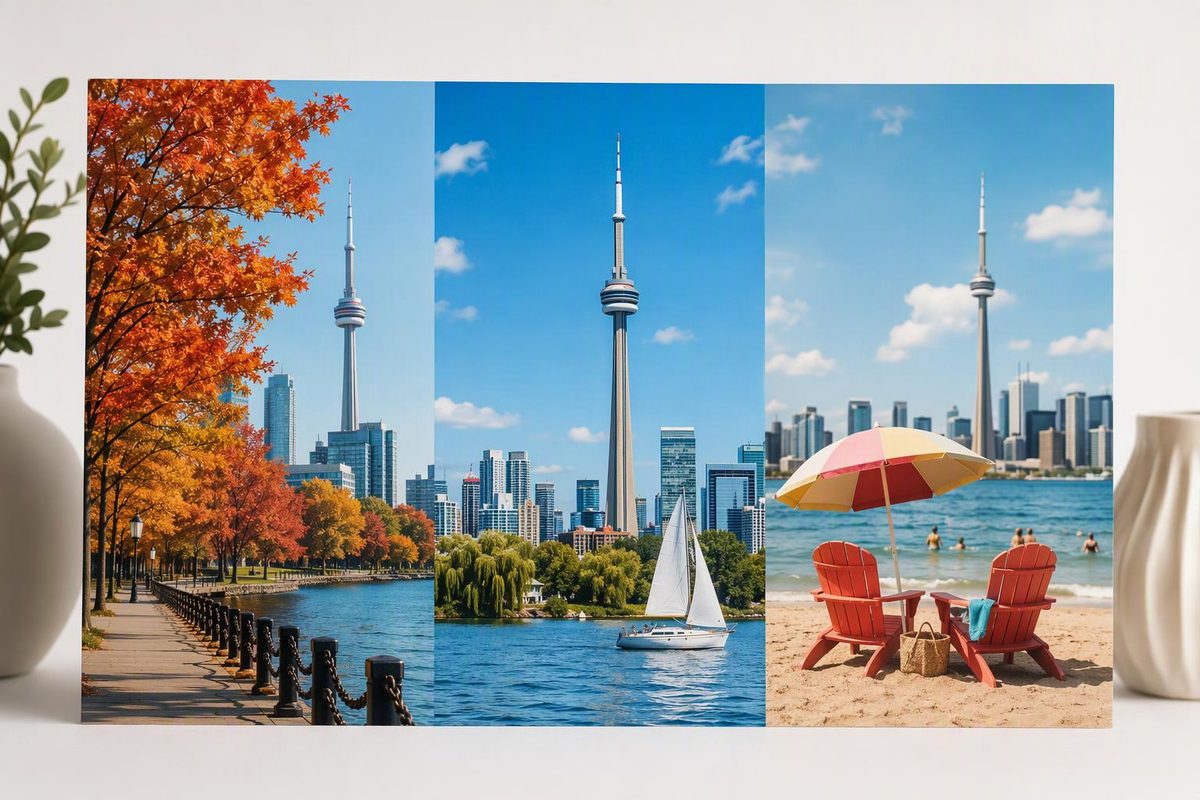
September is the best default for a first Toronto visit built around neighbourhood walks, food and a waterfront day. Choose June instead for a more summer-oriented itinerary with summer ferry service; choose July or August if beaches are central to the trip.
That is a planning recommendation, not a promise of cheaper rooms or empty attractions. Your event dates and the amount of time you want outdoors should decide the final week.
Choose your month by the day you want
The temperatures below are rounded average daily highs from Environment and Climate Change Canada’s 1991–2020 Toronto (City) climate normals. They describe the seasonal baseline, not the forecast for your stay; Celsius and Fahrenheit values are rounded independently.
| Visit window | Best fit | Average daily high | Main trade-off |
|---|---|---|---|
| May | Walking, food stops and parks without seeking midsummer warmth | 19°C / 66°F | Pack layers; don’t build the trip around swimming |
| June | A first visit with neighbourhoods, patios and an Island outing | 24°C / 76°F | Check festival dates before choosing your base |
| July–August | Beaches and a summer-focused visit | 26–27°C / 79–81°F | Allow indoor breaks on hot days |
| September | A balanced walking-and-waterfront trip | 22°C / 72°F | TIFF dates and reduced fall ferry service need checking |
| October | Fall colours and shorter outdoor outings | 15°C / 58°F | Cooler evenings and the switch to winter ferry service |
| December–February | An indoor-led trip with selected winter activities | About 0–3°C / 32–37°F | Long outdoor days require a different plan |
Winter highs are only part of the picture: average daily lows in December–February range from roughly −3°C to −7°C (27°F to 20°F). Plan shorter outdoor stretches rather than treating winter as a cooler version of a summer walking day.
March, April and November are workable for a museum-and-food visit, but they would not be the first choice for an outdoor-heavy introduction to Toronto.
September or June: the strongest first-visit choices
Choose September for walking; June for a more summer-oriented itinerary. Both let you plan a mix rather than commit every day to either indoor attractions or the shoreline.
September needs one important calendar check: the Toronto International Film Festival. Its 2026 edition ran September 10–20; use the official TIFF festival page to check the edition relevant to your booking. If films are the purpose of the trip, start with screening plans. If they are not, compare accommodation on festival and non-festival dates rather than assuming September is inexpensive.
There is also a practical waterfront distinction. The City describes its summer ferry schedule as running mid-May through mid-September, followed by roughly a month of reduced fall service on all three Island routes. A late-September visit can still include the Islands, but check departures and returns before committing the day. Ferries run year-round, though the winter schedule serves Ward’s Island only, rather than all three docks. Check the City ferry schedules for your travel dates.
Summer for beaches; October for fall walks
For a beach-led visit, choose July or August. Toronto’s supervised beach season runs from June to September, and the City recommends swimming only when lifeguards are on duty and within the flagged areas. As of October 24, 2026, its beach listings show supervision finished until summer 2027. City beach information.
Before swimming, check water quality, weather and the flags at the lifeguard stand—not just the temperature. The City notes that flag colours can change throughout the day. Beach safety guidance.
Decide whether you want a mainland beach day or a ferry outing before filling the rest of the itinerary; our Toronto beach comparison helps separate those choices.
October is the better choice when foliage matters more than swimming. Destination Toronto identifies High Park’s October colours and Glen Stewart Ravine near Queen Street East as local options. Neither requires making an out-of-city excursion the centre of your stay. Toronto fall-colour locations.
Match the route—and the budget—to the season
Keep the same basic rule throughout the year: one main area per day, with meals and a backup nearby.
- Warm-weather day: make the waterfront and Islands the main commitment, not an addition between distant attractions.
- Cool or wet day: start with a focused ROM visit, then keep the outdoor portion optional.
- Neighbourhood day: use a streetcar-corridor plan, but check current TTC service alerts before setting out.
For a budget-led trip, compare the same hotel and room type across several candidate weeks, including taxes and cancellation terms. Choose a convenient neighbourhood base before accepting a cheaper room far from your plans: a lower nightly rate is less useful if it adds a long cross-city journey twice a day.