
One Is a Cooking Style, the Other Is a Glaze—Here’s How to Choose
Chicken can be seared on a teppanyaki-style griddle, commonly called hibachi, then finished with teriyaki glaze, making it both.
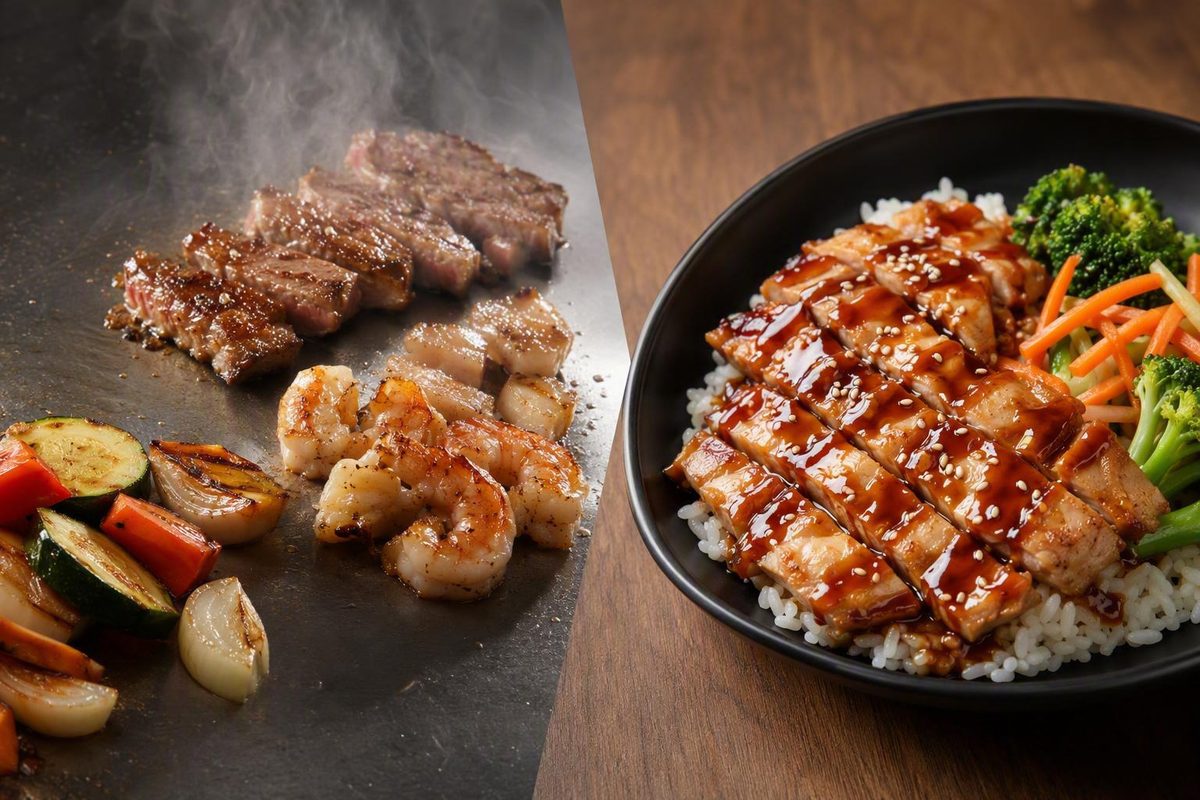
The short answer: hibachi is about how food is cooked; teriyaki is about how it is glazed
The simplest way to understand hibachi vs teriyaki is to recognize that the terms describe different aspects of a meal.
Hibachi primarily identifies cooking equipment or a cooking context. In common North American restaurant usage, it often means food seared on a hot, flat griddle, sometimes in front of diners. Teriyaki identifies a glazing technique, sauce or finished flavor: a sweet-savory coating applied before, during or after cooking.
Menus can make them look like competing entrées by listing “hibachi chicken” beside “teriyaki chicken.” In practice, the first name usually emphasizes griddle cooking, while the second emphasizes sauce. They are not mutually exclusive: chicken can be seared on a griddle and then finished with teriyaki glaze.
Here is the practical comparison:
| Feature | Hibachi | Teriyaki |
|---|---|---|
| Basic definition | Traditionally associated with a charcoal-fired fire bowl; in common North American usage, a high-heat cooking setup or style | A glazing technique, sauce, flavor treatment or dish named for that treatment |
| Common North American meaning | A griddle-cooked meal, sometimes prepared tableside | A sweet-savory glazed entrée |
| Cooking surface | Charcoal equipment in traditional descriptions; commonly a flat steel griddle in North American restaurants | Can be prepared on a grill, under a broiler, in a pan or on a griddle |
| Sauce | No single defining sauce | The glaze or sauce is central |
| Seasoning | Often comparatively restrained, though soy sauce, garlic, butter, oil and other seasonings may be used | Commonly based on soy sauce, sugar, and mirin or sake, with many variations |
| Flavor | Savory and seared, with browning often more prominent | Sweet, salty, savory and sauce-forward |
| Appearance | Usually browned or seared, without a required glossy coating | Often glossy or lightly lacquered |
| Service style | May involve interactive tableside griddle cooking in North American steakhouses | Often served as a plated entrée, but it can be cooked on the same tableside griddle |
| Possible foods | Chicken, steak, seafood, tofu and vegetables | Chicken, steak, seafood, tofu and vegetables |
If you want a comparatively less-sauced meal with a prominent seared character, begin with a hibachi-style preparation. If you want a sweeter, glossier coating, choose teriyaki.
Those are tendencies, not guarantees. “Hibachi” does not promise minimal butter, oil or sauce, and “teriyaki” does not mean the food must be covered in a heavy glaze. Recipes, terminology and serving styles vary by restaurant.
Why restaurant “hibachi” often means teppanyaki
The flat steel cooking surface found at many North American Japanese steakhouses is more precisely associated with teppanyaki than with the traditional meaning of hibachi.
English-language food coverage generally describes a traditional hibachi as a small, open-topped fire bowl or charcoal-fired device. Some descriptions include cooking adaptations fitted with a grate. Teppanyaki, by contrast, uses a broad, flat steel surface heated from below, with food placed directly on the metal. Food Republic distinguishes charcoal hibachi equipment from flat-top teppanyaki cooking.
The terminology is not completely tidy. Historical heating vessels, charcoal cooking equipment and devices sometimes labeled hibachi or shichirin in English should not automatically be treated as identical. For diners, the most useful distinction is narrower: the large flat griddle used in a North American Japanese steakhouse is generally described more precisely as a teppanyaki surface.
Menus commonly offer hibachi chicken, hibachi steak or hibachi combinations even when the chef is using a teppanyaki-style griddle. Both descriptions can therefore be useful:
- Hibachi is the familiar North American menu term.
- Teppanyaki-style griddle cooking is the more technically precise description of the flat-surface method.
Recognizing common restaurant usage is more helpful than declaring every menu universally wrong. The menu term tells diners what format to expect, while the technical term clarifies the equipment actually being used.
The familiar performance—flames, spatula tricks, food tossing and chef interaction—belongs mainly to the North American teppanyaki-style steakhouse experience. It is not essential to every preparation labeled hibachi. A cook can make griddle-seared hibachi-style food in a restaurant kitchen or at home without performing, and charcoal equipment does not inherently involve a tableside show.
“Hibachi” also does not guarantee a smoky flavor. In many North American restaurants, the recognizable character comes from high heat, surface browning, cooking fat and seasonings such as soy sauce, garlic or butter.
A compact terminology map resolves most menu confusion:
- Traditional hibachi: often described as a small charcoal-fired fire bowl, with some versions or adaptations used for grate cooking.
- North American restaurant hibachi: commonly a teppanyaki-style meal cooked on a large flat griddle, sometimes with tableside entertainment.
- Teriyaki: a glaze or flavor treatment that can be combined with several cooking methods, including griddling.
This distinction matters when ordering because “hibachi chicken” may tell you where and how the chicken is cooked without revealing every sauce, fat or seasoning the chef will add.
What teriyaki means: technique, glaze and menu flavor
Teriyaki can refer to several closely related things.
In a cooking discussion, it may mean a glazing technique. In a recipe, it may mean the sauce used to produce that glaze. On a menu, “chicken teriyaki” may identify a finished dish or flavor profile. These meanings overlap rather than conflict.
A commonly cited teriyaki base contains:
- Soy sauce
- Sugar
- Mirin or sake
There is no single universal modern formula. Ginger, garlic, honey, brown sugar and other ingredients may appear, but they are variations rather than requirements. Recipes also differ in sweetness, saltiness and thickness. Chowhound describes teriyaki as using varying combinations of sugar, soy sauce, mirin or sake.
Teriyaki sauce can be used in several ways:
- As a marinade: The ingredient rests in the mixture before cooking.
- As a cooking glaze: The sauce is brushed on during grilling, broiling, pan-searing or griddling.
- As a reduced glaze: The mixture is cooked until it becomes more concentrated and coats the food.
- As a finishing sauce: It is added near the end or spooned over the cooked ingredient.
The intended result is generally a glossy coating with sweet, salty and savory characteristics. Heating and reducing a sugar-containing sauce can make it thicker, stickier and more deeply browned, although the final consistency depends on the recipe and the amount of reduction.
Teriyaki does not require one heat source. A cook might grill fish, broil meat, pan-sear tofu or griddle chicken before applying the glaze. Some preparations simmer the main ingredient in sauce, while others add the sauce late to retain more of the initial seared texture.
That flexibility explains why teriyaki appears alongside many foods and in different restaurant formats. The defining cue is the sweet-savory glazed treatment—not whether the kitchen used charcoal, a broiler, a frying pan or a flat griddle.
Flavor, texture and appearance: what changes on the plate
The most noticeable difference between North American hibachi-style food and teriyaki is usually the prominence of the sauce.
Hibachi-style griddle cooking often uses quick, high-heat searing. Seasoning may be relatively restrained, but the food is not necessarily plain. A restaurant might add soy sauce, garlic, butter, oil, pepper or a proprietary seasoning mixture.
When there is less glaze on the surface, the diner notices more of the browned exterior and the underlying character of the chicken, steak, seafood, tofu or vegetables. Cooking fat and soy-based seasoning can still make the food rich and savory.
Teriyaki shifts attention toward the coating. Its sauce typically contributes sweetness, saltiness and savory depth while producing a shinier surface. As the sauce reduces and browns, it may cling to the food and create a sticky or lightly lacquered texture.
Consider one ingredient prepared in two ways:
- Hibachi-style emphasis: Bite-size chicken is placed on a hot griddle, lightly seasoned and seared until browned. The seared surface, chicken and cooking seasonings remain prominent.
- Teriyaki finish: The same chicken is brushed or tossed with teriyaki near the end. It keeps some griddle browning but gains sweetness, gloss and a more sauce-centered flavor.
Keeping the protein the same makes the distinction clearer. Changing chicken to steak would alter the meal, but it would not explain the underlying difference between hibachi-style cooking and teriyaki glazing.
The contrast should not be overstated. Hibachi-style food is not necessarily dry; it may contain butter, oil, soy-based seasoning or dipping sauce. Teriyaki is not necessarily heavily sauced; a cook can use a thin, reduced glaze. Each restaurant decides where its version falls on that spectrum.
Appearance may offer clues:
- A plainly browned surface suggests a sear-focused preparation.
- A shiny amber-brown coating suggests a glaze.
- A pool of sauce may mean sauce was poured over the food after cooking.
- Browning visible beneath a thin coating suggests the ingredient was seared before glazing.
Protein type does not settle the question. Ask how the food is cooked and whether a sweet-savory glaze is applied.
How one dish can be both hibachi-style and teriyaki
“Hibachi or teriyaki” is often a false either-or choice because one term can describe the cooking context while the other describes the finishing flavor.
A combined preparation might work like this:
- Bite-size chicken is placed on a hot flat griddle.
- The pieces are turned to brown several surfaces.
- Teriyaki sauce is added near the end.
- The sauce reduces briefly and coats the chicken.
The result combines a North American hibachi-style or teppanyaki-style cooking context with teriyaki flavor. In everyday menu language, “hibachi teriyaki chicken” is a reasonable description, although another restaurant might simply call it griddled teriyaki chicken.
Home recipes demonstrate that this overlap is practical, not merely semantic. One griddle recipe sears cubed chicken before adding a teriyaki mixture near the end, while also distinguishing the charcoal meaning of hibachi from the flat steel teppanyaki surface used for the recipe. See the griddle chicken method.
Restaurants can use the same sequence. A diner might sit at a shared teppanyaki table, watch the chef sear chicken and request teriyaki as the finishing flavor. The meal remains part of the familiar North American “hibachi” dining format, while the chicken becomes teriyaki-glazed.
A Venn-style explanation makes the overlap clear:
- Hibachi-style side: Hot cooking surface, quick searing, browned ingredients and less emphasis on a glaze.
- Teriyaki side: Sweet-savory sauce, glossy coating and flavor built around the glaze.
- Overlap: Grilled or griddled food that is seared first and finished with teriyaki.
Fried rice, noodles, vegetables, garlic butter, yum yum sauce and other dipping sauces may accompany the meal, but none defines hibachi or teriyaki. A hibachi-style plate can be served without fried rice or yum yum sauce. Teriyaki can be served without noodles, dipping sauce or tableside cooking.
Understanding the overlap can also give diners more control. Depending on the restaurant, possible combinations might include griddle-seared shrimp with teriyaki applied lightly, steak without a glaze and dipping sauces on the side, or vegetables finished with a thin teriyaki coating.
Which should you order?
Choose according to sauce level, sweetness, seared character and dining experience—not according to whether the menu lists chicken, steak, shrimp or tofu.
Order hibachi-style food if you prefer:
- A more prominent seared flavor
- Comparatively less glaze
- Dipping sauces you can control
- Protein and vegetables cooked on a griddle
- The social experience of tableside cooking
Order teriyaki if you prefer:
- Noticeable sweetness
- A glossy coating
- A more sauce-centered entrée
- Sweet, salty and savory flavors together
- A glaze-centered flavor across the main ingredient
Choosing teriyaki does not necessarily mean giving up seared texture. The cook can grill, pan-sear or griddle the ingredient before brushing it with sauce. When the glaze is applied near the end, some browned surface may remain beneath the coating.
Likewise, choosing hibachi-style cooking does not guarantee an unsauced meal. The chef may use soy sauce, butter or another house mixture while cooking. Dipping sauces or glazed components might also arrive with the plate.
Use this decision guide:
| If your priority is… | Better starting choice | What to request |
|---|---|---|
| Less sweetness | Hibachi-style | Light seasoning; sweet sauces on the side |
| More glaze | Teriyaki | Ask whether it is brushed on or poured over |
| Tableside entertainment | Hibachi or teppanyaki dining | Confirm that the restaurant offers tableside preparation |
| Maximum control over sauce quantity | Either | Request sauce lightly applied or served on the side |
When a menu is unclear, ask direct questions:
- Is the food cooked on a flat griddle or over charcoal?
- Is teriyaki added while the food cooks or poured over afterward?
- Can the glaze be applied lightly or served on the side?
- Can butter or other cooking fat be reduced?
- Are dipping sauces served separately?
- Is the entrée prepared at the table or in the kitchen?
These questions are more informative than the dish name alone, particularly when a restaurant uses “hibachi” broadly for multiple entrées.
Treat tableside performance as a dining-experience preference rather than an inherent flavor advantage. A theatrical meal can be social and entertaining, but the performance itself does not guarantee a stronger sear or more balanced seasoning. A teriyaki entrée prepared in the kitchen can still have grilled, pan-seared or griddled character.
Nutrition, gluten and allergens depend on the whole meal
Neither “hibachi” nor “teriyaki” establishes a meal’s calories, sugar, sodium, fat content or overall nutritional profile. The complete recipe, serving size and combination of components matter more than the label.
Teriyaki commonly contains sugar and soy sauce, but the amount used varies. A thin brushing and a large serving of finishing sauce are not equivalent. Hibachi-style food may look less sauce-forward while still including butter, oil, fried rice, noodles, large portions or several dipping sauces.
More useful variables include:
- The protein or main ingredient
- The amount and type of vegetables
- Rice, fried rice or noodles
- Cooking fat
- Sauce quantity
- Dipping sauces
- Portion size
- Combination entrées or additional courses
For fewer extras, consider choosing a protein with vegetables, asking whether less butter or sauce is available, requesting sauce on the side, or limiting fried rice and additional dipping sauces. These are ordering options rather than health guarantees.
Restaurant-specific nutrition information is more useful than assumptions based on menu names. Benihana, for example, publishes serving-size and nutrition information covering its hibachi entrées, rice, vegetables and sauces, showing why the components should be evaluated separately. View Benihana’s nutrition information.
Neither label automatically establishes that a dish is gluten-free. One restaurant source notes that traditional soy sauce contains gluten, while alternatives may be available; soy-based ingredients can appear in teriyaki sauce or hibachi seasonings. See Yume Hibachi’s dietary discussion.
If avoiding an ingredient is medically necessary, do not rely on the entrée name alone. Ask the restaurant about:
- Sauce and marinade ingredients
- The specific soy sauce or substitute used
- Seasoning mixtures
- Fried-rice and noodle ingredients
- Dipping sauces
- Available substitutions
- How the restaurant handles shared preparation areas
Capabilities differ by kitchen. Benihana, for example, states that its meals are prepared in shared kitchens, but that fact applies to Benihana rather than proving the practices of every hibachi or teriyaki restaurant. Verify the procedures at the specific location where you plan to eat.
Recreating the difference at home
You do not need a restaurant-size griddle to explore the difference between hibachi-style searing and teriyaki glazing.
A flat-top griddle provides a broad surface similar to the equipment used in North American Japanese steakhouses, but several alternatives can support a home interpretation:
- Cast-iron skillet
- Wok
- Electric griddle
- Heavy standard skillet
- Separate pans for different ingredients
A home hibachi recipe specifically identifies separate pans, skillets, woks and electric griddles as workable alternatives to a large griddle. See the home cookware guidance.
Organize the ingredients before heating the pan. Portion the protein, cut the vegetables, measure the seasonings and prepare the glaze in advance.
A side-by-side test demonstrates the difference clearly.
For two batches of chicken, tofu or firm vegetables:
- Cut the main ingredient into evenly sized pieces.
- Remove excess surface moisture where appropriate.
- Heat a lightly oiled griddle or skillet.
- Add the first batch and season it lightly.
- Allow the pieces to brown before moving them repeatedly.
- Remove the first batch when it is properly cooked.
- Sear the second batch in the same way.
- Add teriyaki glaze near the end and toss or brush until lightly coated.
- Taste the batches side by side.
The first batch highlights browning, the main ingredient and simple seasoning. The second keeps some of that seared character but adds sweetness, saltiness, gloss and a more unified sauce flavor.
Meat and vegetables may cook at different rates, so preparing them separately can provide better control. One home hibachi chicken recipe recommends using separate pans or different parts of the cooking surface, then combining the components after each reaches the desired doneness. Read the skillet and griddle guidance.
Add a sugar-containing teriyaki sauce toward the end of high-heat cooking. A griddle recipe using honey and brown sugar warns that its sauce can become sticky and burn when exposed to intense heat too early. Sauce formulas vary, so watch its texture and browning instead of relying on one universal cooking time.
For a thicker coating, reduce the teriyaki separately and apply it briefly at the end. For a lighter result, brush on a smaller amount without reducing it as far. Neither consistency is mandatory.
Fried rice, garlic butter, yum yum sauce and particular vegetables are optional. They may help reproduce a familiar North American steakhouse meal, but they are not required to demonstrate the distinction between searing and glazing.
Keep charcoal-fired equipment separate from an indoor skillet or electric-griddle method. The supplied food-safety coverage states that charcoal hibachi equipment emits toxic gases and requires appropriate ventilation. Read the charcoal-equipment discussion. Do not assume that equipment designed to burn charcoal can be used wherever an ordinary indoor griddle can.
Is American hibachi actually teppanyaki?
Often, yes. When “hibachi” means food cooked on a large flat steel surface in front of diners, teppanyaki-style cooking is the more precise description.
“Hibachi” remains the familiar North American menu term, however, so both words may be used for the same restaurant format.
Can a dish be both hibachi and teriyaki?
Yes. Chicken can be seared on a teppanyaki-style griddle—a preparation commonly called hibachi in North America—and then finished with teriyaki glaze.
The first term describes the cooking context; the second describes the sauce and final flavor.
Which is sweeter, hibachi or teriyaki?
Teriyaki is generally sweeter because its sauce commonly contains sugar or another sweetener. Hibachi-style food more often emphasizes searing and savory seasoning.
Recipes vary, so hibachi-style food can include a sweet sauce and teriyaki can be applied lightly.
Is hibachi healthier than teriyaki?
Not necessarily. Teriyaki may add sugar and soy-based seasoning, while a hibachi-style meal may include butter, oil, fried rice, noodles and dipping sauces.
Compare the protein, vegetables, cooking fat, sauce quantity, sides and serving size rather than judging by the menu name.
Are hibachi and teriyaki gluten-free?
Neither is automatically gluten-free.
If avoidance is medically necessary, confirm the ingredients, substitutions and shared-kitchen practices directly with the restaurant.
Ultimately, the hibachi vs teriyaki comparison is resolved by recognizing that the terms describe different categories. Hibachi tells you more about the cooking equipment or griddle-centered context; teriyaki tells you more about the glaze and final flavor. Choose according to sauce level, sweetness, seared character and the dining experience you want—or combine both by finishing a griddle-seared ingredient with teriyaki glaze.