
How Ethiopia’s Spices Build Heat, Aroma, and Depth
Choose seasonings by five practical roles: simmered chile, turmeric-led mildness, intense heat, finishing aroma and seasoned fat.
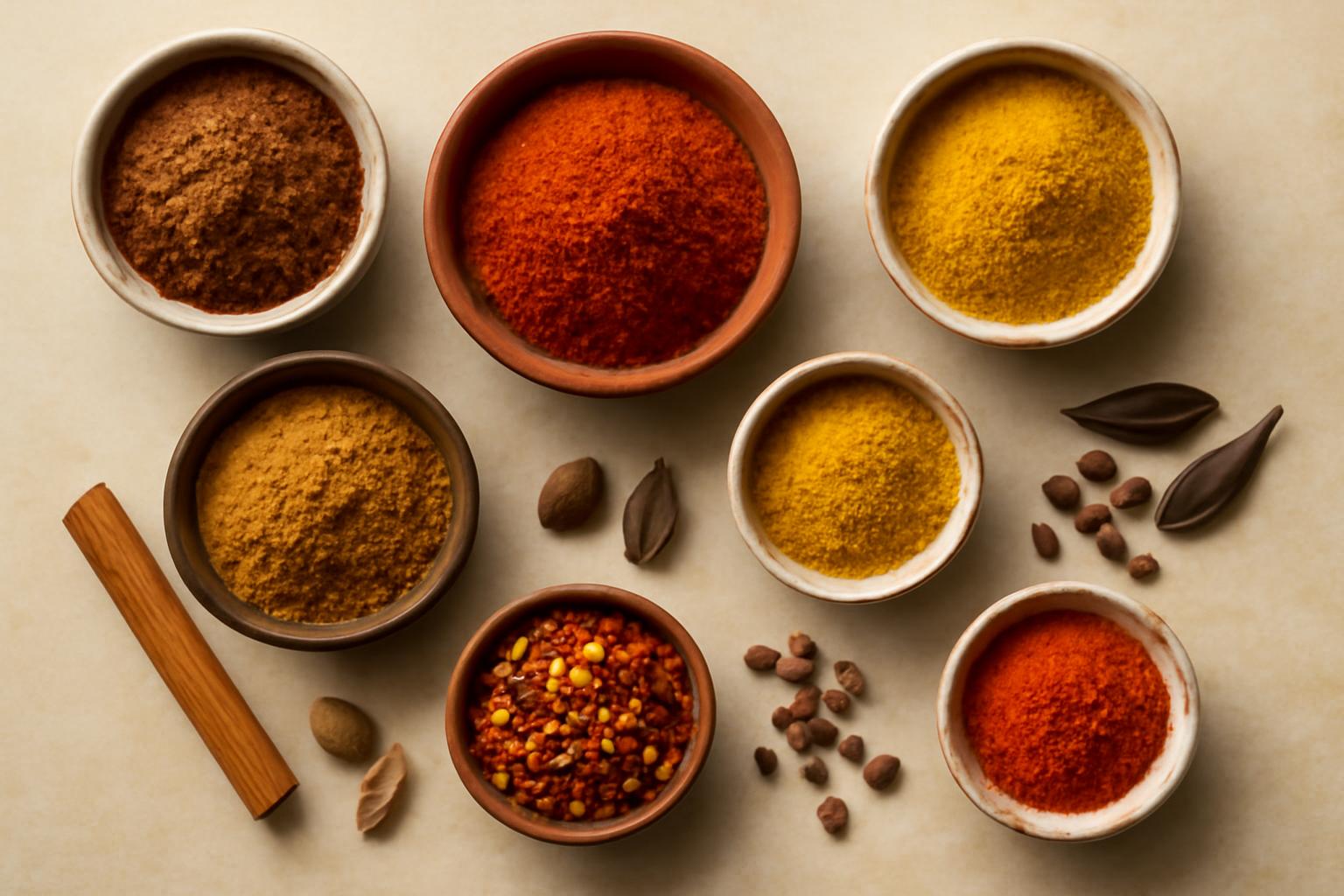
Ethiopian food spices are best understood as a layered seasoning system, not a fixed checklist of essential jars. One mixture may establish a chile-rich foundation during simmering, another may supply concentrated heat, and a third may add fragrance near the finish. Mild dishes can follow a turmeric-led path, while seasoned clarified butter carries aromatics through a dish.
This functional view prevents a common category mistake: not every Ethiopian seasoning is an individual spice—or even a dry blend. Berbere, mitmita, and mekelesha are compound mixtures. Awaze is a prepared condiment, niter kibbeh is seasoned clarified butter, and shiro mitten is a chickpea-based mixture.
The English-language culinary sources reviewed for this introductory guide document recurring patterns, not every Ethiopian community or tradition. Names, transliterations, ingredients, and proportions vary among households, recipes, and sellers. The culinary job a product performs is often more informative than a supposedly definitive ingredient list.
Start With the Categories: Spices, Blends, Condiments, and Seasoned Fats
The broad label “Ethiopian food spices” covers several kinds of pantry ingredients. Sorting them by form and function makes unfamiliar names easier to understand.
Individual spices, seeds, herbs, and aromatics discussed in the reviewed sources include:
- Korarima or korerima, commonly described in English as Ethiopian cardamom or Ethiopian black cardamom
- Ird, meaning turmeric
- Zinjibel, or ginger
- Abish, or fenugreek
- Dembelal, or coriander
- Krenfud, or cloves
- Besobela or besobila, an Ethiopian basil
- Timiz, an Ethiopian pepper whose English labeling requires caution
- Tikur azmud, variously labeled black seed, black cumin, or a related name
- Nech azmud, variously associated with ajwain, caraway, or bishop’s weed
- Nech shinkurt, or garlic
Some translations are relatively straightforward: ird is turmeric, zinjibel is ginger, and dembelal is coriander. Others are unstable across English-language sources and product labels. Timiz, tikur azmud, and nech azmud should therefore be purchased by their Ethiopian names when possible rather than matched casually to a familiar English term.
Compound dry blends combine multiple seasonings for particular culinary roles:
- Berbere is a chile-forward blend generally cooked into stews and other savory dishes.
- Mitmita is a concentrated hot-chile mixture.
- Mekelesha or melekesha is generally an aromatic finishing blend.
- Alicha kimem is sold as a mild savory blend.
- Manteria or ye’kibe qemam refers to mixtures used while preparing seasoned clarified butter.
These sit beside several related but physically different products. Retail descriptions classify awaze as a condiment, niter kibbeh as spiced clarified butter, and shiro mitten as a chickpea blend rather than a spice alone. The same descriptions identify mitmita as a hot-chile blend, mekelesha as a finishing mix, and alicha kimem as a mild blend (Brundo’s Ethiopian seasoning categories).
For home cooks, the system can be reduced to five practical functions:
- Simmering blend: Berbere develops within a stew, sauce, or braise.
- Concentrated heat: Mitmita delivers direct chile intensity.
- Mild seasoning: Turmeric or an alicha blend supports dishes without a red-chile foundation.
- Finishing aroma: Mekelesha is added late enough to retain more of its fragrance.
- Fat infusion: Aromatics and spices flavor butter as it becomes niter kibbeh.
These categories are guides, not rigid rules. A recipe may incorporate mitmita during preparation rather than using it at the table, and an aromatic ingredient can appear at more than one stage. Spelling also varies: korarima may appear as korerima, besobela as besobila, and mekelesha as melekesha.
Berbere: The Chile-Forward Foundation
Berbere is a chile-centered blend associated with Ethiopian and Eritrean cooking. Its broad profile is hot, warming, aromatic, and complex, but neither its formula nor its intensity is standardized. The chosen chilies, their proportions, and the supporting spices all shape the result.
Across several reviewed formulations, chilies, ginger, and fenugreek recur frequently. Depending on the recipe, berbere may also contain garlic, korarima or another cardamom, coriander, cloves, cinnamon, dried basil, ajwain, nigella, nutmeg, allspice, onion, or black pepper. Comparisons of published recipes show substantial differences in both ingredients and emphasis, so no single list should be treated as universally definitive (comparison of berbere formulations).
What berbere tastes like
Depending on its formula, berbere can combine:
- Fruity or sweet dried-chile notes
- Earthy bitterness from fenugreek
- Warmth from ginger
- Earthy, smoky, or floral character from korarima
- Sweet-spice notes from cloves, cinnamon, allspice, or nutmeg
- Savory pungency from garlic and onion
- Herbal character from besobela or another dried basil
The balance may lean bright, earthy, smoky, floral, bitter, or sweetly aromatic. Two products carrying the same name can therefore produce noticeably different versions of a dish.
Berbere may also contribute to a sauce’s body. Some documented Ethiopian stews use ground spices more substantially than dishes in which a blend merely coats the surface. That does not support one universal amount: chile strength, onion base, liquid level, and the intended consistency all matter. Follow a tested dish recipe until you know how your particular berbere behaves.
Dry shortcuts and staged preparation
A practical home method is to toast selected whole spices gently, cool them, grind them, and combine them with dried chilies and ingredients that were already powdered.
A more involved method described in one detailed guide begins with crushed dried chilies, ginger, garlic, and herbs in a moist preparation called delez berbere. That preparation is aged or dried before being combined with toasted spices. A shortcut dry version instead uses ingredients such as dried ginger, garlic powder, and onion powder to approximate parts of the aromatic structure without the wet stage (Diversivore’s discussion of wet and dry berbere methods).
The methods differ in sequence, labor, and ingredients. The supplied evidence does not include a controlled comparison of their results, so it cannot establish how much deeper, better, or more traditional one will taste in a particular kitchen.
Adjusting the heat
Chile selection is the most direct way to change berbere’s heat:
- Paprika and lower-heat dried chilies make a gentler mixture.
- Cayenne, árbol, bird’s-eye, and other hot chilies increase the burn.
- Combining mild and hot chilies can retain a substantial chile flavor while moderating intensity.
This is not a flavor-neutral adjustment. A paprika-heavy berbere may suit a heat-sensitive household, but it will not taste identical to one made with hotter or more aromatic dried chilies.
How cooks use it
Representative uses include:
- Doro wat and other chile-forward stews
- Red lentil wot
- Meat or vegetable braises
- Tomato-and-onion sauces
- Tibs and other stir-fried preparations
- Roasted vegetables
- Savory rubs
A long-cooked wot may rely on berbere for both flavor and body, while roasted vegetables need only enough to season their surface. The practical principle is that when berbere forms the main seasoning base, it is generally cooked with the other ingredients rather than used only as a last-second garnish. Culinary overviews likewise describe it as a household-variable blend used in stews, stir-fries, braises, rubs, and roasted foods (Milk Street’s guide to Ethiopian spices and sauces).
Berbere, Mitmita, and Mekelesha Compared
These blends are often grouped together, but they are not competing versions of the same mixture. Their clearest differences are role, heat concentration, and cooking stage.
| Blend | Dominant role | Relative heat | Recurring ingredients | Cooking stage | Representative uses |
|---|---|---|---|---|---|
| Berbere | Builds the main chile-spice foundation | Hot, but highly variable | Dried chilies, ginger, fenugreek; variably garlic, korarima, coriander, cloves, cinnamon, basil, ajwain, nigella, or nutmeg | Generally during cooking or simmering | Wot, lentils, braises, sauces, stir-fries, roasted vegetables |
| Mitmita | Supplies concentrated chile heat | Generally hotter than berbere, but not standardized | Very hot chilies, cardamom, cloves, salt; sometimes herbs or seeds | Recipe-specific or used sparingly as an accent | Kitfo, spiced fresh cheese, table seasoning |
| Mekelesha or melekesha | Adds warm finishing fragrance | Usually not chile-led | Black pepper, cardamom, cinnamon, cumin, cloves, nutmeg; sometimes ginger or a long-pepper-like ingredient | Near the end of cooking | Wot, greens, vegetable dishes, aromatic sauces |
These are recurring descriptions in selected culinary sources rather than fixed national formulas. A specialist overview, for example, describes mitmita as hotter, lighter-colored, and less complex than berbere, while presenting mekelesha as a variable aromatic mixture added shortly before a wot finishes cooking (overview of Ethiopian spices and blends).
Berbere builds the base
Berbere has the broadest cooking role of the three. Its chilies and supporting spices are incorporated so they can mingle with onion, fat, meat, legumes, vegetables, or liquid. Its purpose is not necessarily to create the hottest possible dish; integration and complexity are central to its role.
Mitmita concentrates heat
Mitmita is generally described as hotter and less complex than berbere. Documented formulations center on very hot peppers with cardamom, cloves, and salt, although herbs, ajwain, or other seeds may also appear.
Because formulas and peppers vary, “hotter than berbere” is a practical expectation rather than a guarantee about every package. Mitmita can be built into a specific recipe, but it is also suited to restrained use on foods such as kitfo or spiced fresh cheese. Taste cautiously before seasoning an entire dish.
Mekelesha finishes the aroma
Mekelesha—also written melekesha—is usually a warm aromatic mixture rather than a chile foundation. Black pepper, cardamom, cinnamon, cumin, cloves, and nutmeg recur in several published recipes. Ginger, timiz, or another long-pepper-like ingredient may also appear.
It is commonly added near the end of cooking so its aromatic character is not exposed to the full simmer. That makes it a final lift rather than a substitute for berbere’s integrated chile base.
Mekelesha is sometimes described as a “seven-spice” blend, but the phrase does not establish an exact formula. One published account uses that label while listing more than seven possible ingredients, depending on how alternatives are counted (example of the inconsistent “seven-spice” description). Nor does the available evidence support automatically equating mekelesha with other named mixtures such as makulaya or matafecha.
The practical distinction is simple:
- Berbere: main chile-spice base
- Mitmita: concentrated heat
- Mekelesha: finishing fragrance
A Glossary of Individual Ethiopian Spices and Herbs
Ethiopian names may be transliterated in several ways. The descriptions below summarize how selected English-language culinary sources characterize the ingredients without assuming that similarly named supermarket products are identical.
Korarima or korerima
Common English descriptions: Ethiopian cardamom, Ethiopian black cardamom Reported flavor: Earthy, smoky, savory, floral Documented roles: Savory stews, stir-fries, kitfo, spice blends, fasolia, and seasoned butter
Korarima contributes a deep aromatic note suited to savory cooking. Although it is often called black cardamom, that English label does not prove that it is interchangeable with every other product sold under the same name. It is also distinguished from ordinary green cardamom in the reviewed sources.
When a recipe calls for whole korarima, determine whether it wants the pod, the interior seeds, or a measured quantity of ground spice. One documented preparation is to use the seeds inside, toast them gently if desired, let them cool, and then grind them (guide to preparing korerima).
Ird
English equivalent: Turmeric Reported flavor: Earthy, warm, gently bitter Documented roles: Mild alicha-style stews, legumes, vegetables, and selected cold vegetable preparations
Ird gives mild dishes a golden color and an earthy base without introducing berbere’s red-chile profile. It commonly appears in documented recipes with onion, garlic, and ginger. Yellow split peas, potatoes, cabbage, carrots, and other vegetables can all follow this mild seasoning path.
Turmeric need not be handled exactly like berbere. In a comparatively quick dish, it can cook briefly with the aromatic base before the main ingredients or liquid are added.
Besobela or besobila
Cautious English description: Ethiopian basil; described in some culinary sources as sacred basil or a relative of holy basil Reported flavor: Herbal, grassy, sometimes lemony Documented roles: Berbere, other dry mixtures, and niter kibbeh
Besobela supplies a distinct dried-herb note rather than acting merely as a garnish. Ordinary dried sweet basil or holy basil may preserve part of its broad herbal role, but either substitution changes the resulting flavor.
Timiz
Cautious English description: Ethiopian pepper; associated by some sources with Piper capense Reported flavor: Peppery, mildly smoky, fruity, or allspice-like Documented roles: Aromatic mixtures and savory dishes
Timiz is sometimes labeled Ethiopian long pepper, but the evidence does not support declaring it identical to Indian long pepper, Piper longum. Some sources associate Ethiopian timiz with Piper capense and explicitly distinguish the two. Buy by the Ethiopian name and supplier description when possible.
Tikur azmud
English labels encountered: Black seed, black cumin, Ethiopian black cumin Documented roles: Flavor enhancer, bread seasoning, or component paired with other spices
The English terminology is inconsistent. “Black seed,” “black cumin,” and nigella can refer to different products in different settings, so matching one phrase on a label is not enough to establish equivalence.
Nech azmud
English labels encountered: Ajwain, ajwainee, caraway, bishop’s weed, Ethiopian caraway Documented roles: Mild spice mixtures, turmeric-led dishes, or broader seasoning blends
These English terms are not automatically interchangeable. Ajwain and caraway have different culinary identities even though both appear in translations and seller descriptions. When nech azmud matters to a recipe, use a product sold under that Ethiopian name or follow the recipe author’s stated substitute.
The source disagreement surrounding timiz, tikur azmud, and nech azmud is documented in an extended survey of Ethiopian spices, which also identifies ird as turmeric, besobela as an Ethiopian basil, and korarima as an Ethiopian cardamom used in savory foods.
Additional names to recognize
- Zinjibel: Ginger, used fresh or dried in aromatic bases and spice mixtures.
- Abish: Fenugreek, an earthy and somewhat bitter seed that appears in many berbere formulations.
- Dembelal: Coriander, used in some berbere and other mixtures.
- Krenfud: Cloves, a potent warm spice that may appear in berbere, mitmita, mekelesha, and seasoned butter.
- Nech shinkurt: Garlic, commonly used in the early aromatic base and sometimes included in dried mixtures.
These are navigation aids, not a claim that every household keeps or uses every ingredient in the same way.
Hot Wot, Mild Alicha, and Other Cooking Roles
The most useful way to choose a seasoning is to begin with the intended role: chile-rich and simmered, mild and turmeric-led, intensely hot, aromatically finished, or enriched with seasoned fat.
For chile-forward wot and braises
In a spicy wot, berbere is generally integrated into the cooking base. Onion, fat, garlic, and ginger may establish the foundation before berbere cooks with that base and the recipe’s liquid.
As the dish simmers, the blend becomes part of the sauce rather than remaining a layer of dry powder. This approach appears in preparations based on lentils, chicken, beef, or vegetables, although the exact sequence and amount belong to the individual recipe.
Berbere can perform a similar role in braises and tomato-onion sauces. In stir-fries or roasted vegetables, it receives less cooking time and is usually used in a different proportion.
For mild alicha-style cooking
Alicha-style dishes follow a different path. Instead of building around red chile, a cook may use turmeric with onion, garlic, ginger, and a mild savory mixture. The result can be layered and aromatic while remaining yellow, earthy, and warm rather than chile-led.
One documented home recipe combines yellow split peas with olive oil, onion, garlic, ginger, turmeric, and salt. The same source’s niter kibbeh recipe infuses butter with ginger, allspice, fenugreek, oregano, turmeric, black cardamom, garlic, and onion, illustrating how seasoned fat can add another layer to legumes (home recipes for yellow split peas and niter kibbeh).
Those ingredients and proportions belong to that recipe; they do not define every alicha or niter kibbeh. The broader lesson is that a mild dish need not be bland. Developed onion, fresh aromatics, turmeric, and seasoned fat can create depth without berbere.
For a distinctive savory fragrance
Korarima appears in documented uses including:
- Savory stews
- Stir-fries
- Kitfo
- Berbere and other compound mixtures
- Niter kibbeh
- Fasolia and other bean or vegetable dishes
In a tested recipe, korarima may be part of the main spice mixture, infused into fat, or used as a supporting aromatic. Following that structure is more reliable than adding an arbitrary quantity.
For intense heat
Mitmita suits applications that call for direct chile intensity rather than berbere’s broader simmered complexity.
Its strength varies. Color and name alone cannot reveal exactly how hot a batch will be, so a cautious taste is more reliable than assuming one package will behave like another.
For finishing fragrance
Mekelesha can finish wot, greens, or vegetables with warm notes such as cardamom, black pepper, cumin, cinnamon, cloves, and nutmeg. Add it late enough to preserve more of its aroma but with enough time for it to disperse through the dish.
For fat infusion
Niter kibbeh is clarified butter infused with a variable assortment of spices and aromatics. Documented versions may include ginger, garlic, onion, fenugreek, turmeric, korarima, besobela, cumin-like seeds, or other herbs.
It functions differently from a dry blend. It can begin a dish as the cooking fat, enrich ingredients during cooking, or contribute flavor later in preparation. The exact mixture depends on the recipe.
Many of these dishes may be served with injera, but the central seasoning decision happens before serving: determine whether the dish needs a simmered chile base, a mild turmeric base, concentrated heat, finishing fragrance, or seasoned fat.
When to Add Each Seasoning
No single timeline fits every Ethiopian dish, but a three-stage model explains why the major blends are not interchangeable.
Early: build the aromatic base
Begin with ingredients the recipe intends to soften, cook, or infuse into fat:
- Onion
- Garlic
- Ginger
- Niter kibbeh or another cooking fat
- Any mixture specifically identified as an early sautéing blend
A wot may devote substantial attention to its onion base, while a quick vegetable preparation may use a shorter process. Follow the recipe’s sequence so garlic, ginger, and ground spices do not burn.
Making niter kibbeh is a separate preparatory process: butter is clarified with selected spices and aromatics and then strained for later use.
During cooking: integrate berbere
Berbere generally belongs in the active cooking or simmering stage. Contact with the onion base, fat, and liquid allows it to become part of the sauce rather than remaining dusty.
Avoid scorching ground chilies and spices. Stir as the recipe directs and add liquid when called for.
Turmeric may also enter around the aromatic stage, but a mild dish does not necessarily require the same development as a berbere-heavy stew. It can cook briefly with onion, garlic, and ginger before vegetables, legumes, or liquid are added.
Near the end: preserve mekelesha’s fragrance
Mekelesha generally enters near the finish. Published recipes describe adding it late so ingredients such as black pepper, cardamom, cinnamon, cumin, cloves, and nutmeg do not undergo the entire simmer (berbere and melekesha preparation guide).
“Near the end” is more useful than an unsupported universal number of minutes. A large stew and a small vegetable sauté distribute seasoning differently. Follow the recipe and allow enough time for the mixture to disperse.
Mitmita: follow the application
Mitmita has no single mandatory stage. If it appears in a kitfo or cheese recipe, add it where that recipe directs. When using it as a finishing seasoning, begin cautiously and taste before adding more.
When making a blend: toast, cool, grind
A recurring method for homemade mixtures is:
- Toast selected whole spices gently.
- Cool them completely.
- Grind them.
- Combine them with ingredients that did not require toasting.
This is not required for every ingredient or commercial blend. Already-ground spices are especially easy to scorch. Paprika, powdered ginger, and ground chilies may be mixed in after toasted whole spices have cooled rather than subjected to the same pan heat.
Substitutions and Shopping Without False Equivalence
A substitution may preserve a broad culinary role—such as floral warmth, herbal character, or chile heat—without duplicating the original ingredient. That distinction is especially important when English labels are inconsistent.
Korarima substitutes
Some home recipes use green cardamom when korarima is unavailable. It can provide floral cardamom character, but the reviewed sources distinguish it from korarima. Use it when a recipe recommends the substitution or when you accept that the flavor will change.
A generic package labeled “black cardamom” is not automatically equivalent either. If korarima is important to the dish, look for korarima or korerima on the package.
Besobela substitutes
Possible approximations include:
- Ordinary dried basil
- Holy basil
- Omission when besobela is a minor component
- Another workaround expressly recommended by the recipe
Sweet basil can preserve a general herbal quality without reproducing besobela exactly. A detailed berbere guide presents dried basil and green cardamom substitutions as practical workarounds rather than true equivalents (ingredient notes and substitutions for berbere).
Nigella workaround
One recipe developer suggests using additional cumin when nigella is unavailable. That is a convenience for that particular mixture, not an established equivalence. The same source describes nigella as having cumin-like, onion-like, herbal, and mildly bitter qualities.
Adjusting specialty chilies
For a milder berbere, paprika or lower-heat dried chilies can form more of the chile base. For greater intensity, possible choices include cayenne, árbol, or bird’s-eye chilies.
Changing the pepper also changes:
- Color
- Fruitiness
- Bitterness
- Aroma
- The speed and character of the perceived heat
A gentler mixture may be more useful for a particular household, but it should not be described as sensorially identical to a hotter formulation.
Timiz, tikur azmud, and nech azmud
These ingredients require particularly careful shopping. Do not assume:
- Timiz is always Indian long pepper.
- Tikur azmud is always nigella or every product called black cumin.
- Nech azmud is always either ajwain or caraway.
Look for the Ethiopian name, inspect any ingredient or botanical information provided, and compare it with the recipe author’s description. If uncertainty remains, choose a recipe that states its substitute rather than improvising from an English label alone.
Read the product category, not just the name
Before buying, determine whether the package contains:
- An individual spice or herb
- A compound dry blend
- A salted hot seasoning
- A prepared condiment
- A seasoned cooking fat
- A chickpea or other legume mixture
This prevents mistakes such as treating awaze as dry berbere, using shiro mitten as though it were a jar of pure spice, or expecting mekelesha to provide berbere’s chile foundation.
Alternate spellings can help with shopping:
- Korarima / korerima
- Besobela / besobila
- Mekelesha / melekesha
- Niter kibbeh / niter kibe
- Wot / wat
Different spelling does not necessarily indicate a different product. Ingredients, salt level, chile type, and intended use may be more consequential.
A Compact Starter Pantry for Ethiopian-Inspired Home Cooking
No short list can define what is culturally essential across Ethiopian households. The suggestions below are an editorial starting point organized around what a beginner wants to cook.
Four versatile starting points
1. Berbere for chile-forward cooking
Choose berbere first if you plan to make spicy lentil stews, doro wat, braises, tomato-onion sauces, stir-fries, or roasted vegetables. Check whether the mixture contains salt and taste its heat before using a recipe-sized amount.
2. Turmeric or ird for mild dishes
Choose turmeric for yellow split peas, mild legumes, potatoes, cabbage, carrots, and alicha-style preparations. It provides a route into Ethiopian-inspired seasoning without requiring a hot red-chile blend.
3. Korarima for distinctive savory aroma
Add korarima if you want to explore an earthy, smoky, floral aromatic used in selected stews, mixtures, kitfo preparations, and seasoned butter. Whole seeds can be toasted gently and ground when a recipe calls for that treatment.
4. Mekelesha for finishing
Mekelesha is useful when you want to distinguish the simmered base from the final aromatic layer. It can finish stews or vegetables with some combination of pepper, cardamom, cumin, cinnamon, cloves, nutmeg, or related seasonings.
Optional fifth purchase: Mitmita
Buy mitmita if concentrated heat is a priority. It is less useful to someone focused entirely on mild legumes and vegetables, but valuable for kitfo, spiced cheese, or controlled table-side heat.
Three goal-based pantry pathways
Hot-stew pantry
- Berbere
- Korarima
- Mitmita
- Ginger and garlic
- Optional mekelesha
This route supports chile-rich stews and braises, with mitmita available for additional heat and mekelesha for the finish.
Mild vegetarian pantry
- Turmeric or ird
- Ginger
- Garlic
- Fenugreek
- A mild alicha blend or ingredients for seasoned fat
This route suits split peas, lentils, potatoes, cabbage, carrots, and other vegetables without relying on a red-chile base.
Broader aromatic pantry
- Berbere
- Turmeric
- Korarima
- Mekelesha
- Besobela, if available
- Mitmita, if desired
This selection provides a clear contrast among simmered heat, mild earthiness, distinctive savory fragrance, and late-stage aroma.
Awaze, niter kibbeh, and shiro mitten can expand any pathway, but they serve different functions. Awaze is a prepared condiment, niter kibbeh is seasoned clarified butter, and shiro mitten is a chickpea mixture. None is simply another jar of dry spice.
Frequently Asked Questions
What spices are commonly found in berbere?
Berbere is centered on dried chilies. Ginger and fenugreek recur in several reviewed formulations, while garlic, cardamom or korarima, cloves, coriander, cinnamon, basil, ajwain, nigella, allspice, nutmeg, onion, and black pepper appear variably.
No single ingredient list defines every household mixture. Read a recipe or label as one formulation rather than a universal standard. Chile selection matters as much as the supporting spices: a paprika-led blend can taste very different from one based on hotter or fruitier peppers.
Is mitmita hotter than berbere?
Generally, yes. The reviewed culinary sources commonly describe mitmita as hotter and less complex than berbere, with very hot chilies supported by ingredients such as cardamom, cloves, and salt. Berbere is more often developed within a dish as a broad simmering foundation, while mitmita provides concentrated heat.
That is a comparison of typical roles, not a guarantee. Household and commercial formulas vary, and a particularly hot berbere could exceed a milder mitmita. Taste each product cautiously.
Are korarima and ordinary black or green cardamom the same?
They should not be treated as identical. Korarima is commonly called Ethiopian cardamom or Ethiopian black cardamom, but that label does not establish equivalence with every spice sold as black cardamom. The reviewed culinary sources describe korarima as earthy, smoky, floral, and savory.
Green cardamom can be an accessible approximation when a recipe recommends it, but it changes the flavor. If korarima is important to the dish, search for korarima or korerima rather than relying on the generic word cardamom.
What is mekelesha, and when should it be added?
Mekelesha, also spelled melekesha, is an aromatic finishing blend. Depending on the formula, it may contain black pepper, cardamom, cinnamon, cumin, cloves, nutmeg, ginger, timiz, or another long-pepper-like ingredient.
It is commonly added near the end of cooking so its fragrance is not subjected to the entire simmer. It may finish wot, greens, vegetables, or another savory dish. Its formula is not standardized, and it does not necessarily contain exactly seven spices.
Are awaze and niter kibbeh Ethiopian spice blends?
Not in the same physical sense as berbere or mekelesha. Awaze is a prepared condiment, with documented versions based on berbere, water, and oil. Individual recipes may use additional ingredients. Niter kibbeh is spiced clarified butter, infused with a variable assortment of aromatics such as ginger, garlic, fenugreek, turmeric, cardamom, basil, or onion.
Both carry spices, but their culinary jobs differ. Awaze accompanies or finishes food as a condiment, while niter kibbeh functions as a seasoned cooking fat.
The central framework remains straightforward: berbere builds a simmered chile-spice foundation, mitmita supplies concentrated heat, mekelesha contributes finishing fragrance, turmeric supports milder dishes, and korarima adds a distinctive savory aroma. Begin with the pathway that matches what you want to cook, then follow a specific recipe for quantities. Varying spellings and formulas are reasons to compare labels, taste carefully, and remain curious—not evidence that one household version is the only correct one.