Toronto BureauEst. 2026
Feature

What to Know Before Bringing a Shaggy, White-Pointed Cow Home

By Naomi Singh

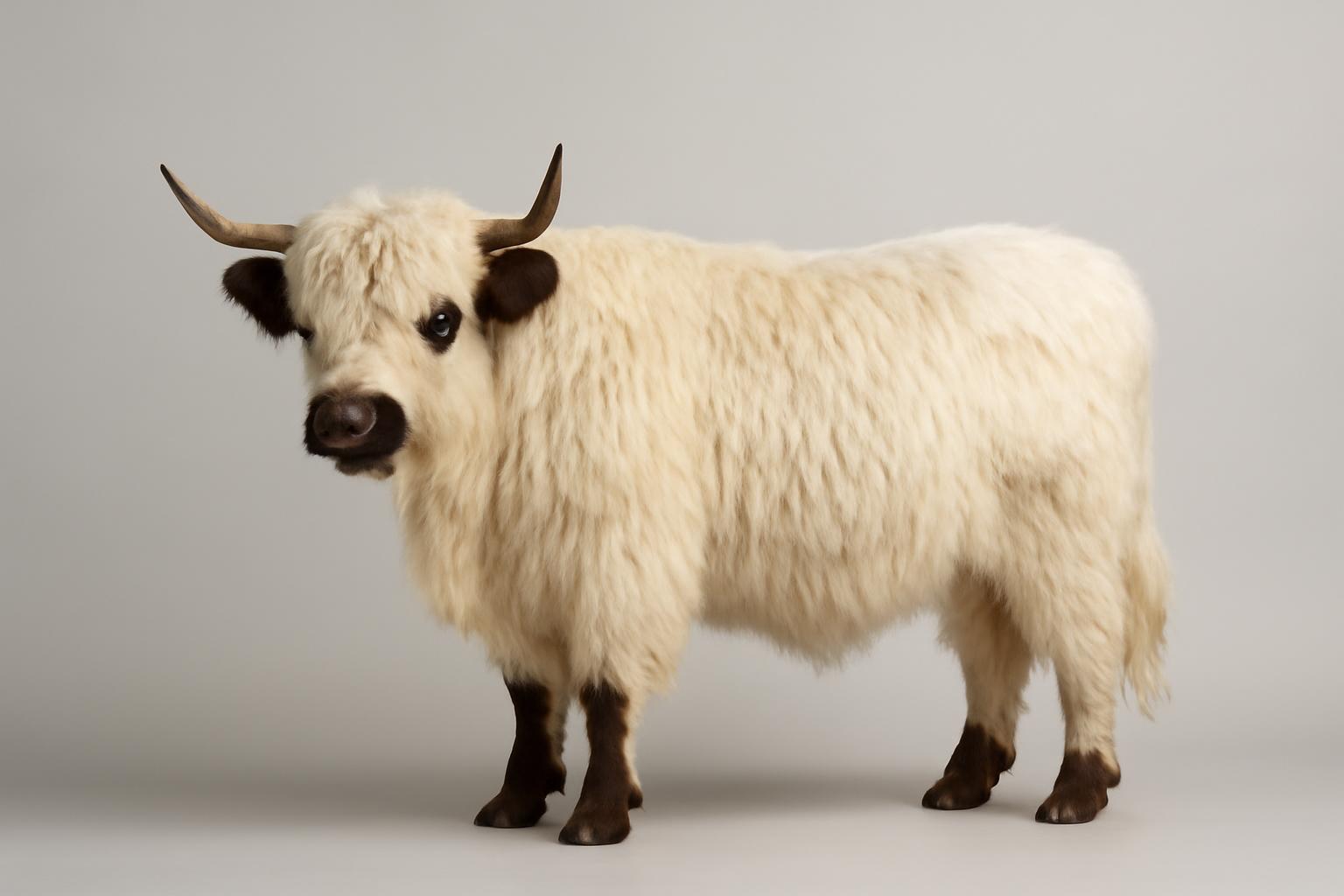
HighPark cattle are visually distinctive: the familiar ideal is a shaggy animal with a mostly white body and darker ears, muzzle, eye markings or feet. Their ancestry, mature size, horn status and registry eligibility, however, can vary substantially.

That variation matters when evaluating a HighPark for a homestead, hobby farm or small acreage. Terms such as “micro,” “mini,” “mid-size,” “registered” and even “HighPark” do not have one demonstrated meaning across the marketplace. A photograph or sales label cannot establish how large a calf will become, whether its pedigree is accurate, whether relevant genetic concerns have been investigated or whether a property is suitable for cattle.

The practical approach is to treat appearance as the start of an investigation—not the conclusion. Before buying, examine the animal’s documented ancestry, the applicable registry rules, mature parental measurements, available health information, horn status, handling history and long-term care requirements.

Scope note: The available HighPark-specific evidence comes primarily from registries, a breeder and overlapping agricultural reporting rather than independent breed-recognition, veterinary, genetics or university-extension authorities. This article therefore offers a cautious introduction and document-checking framework, not a veterinary, genetic, facility-design or farm-management protocol. Material health, breeding and safety questions should be reviewed with qualified local professionals.

What are HighPark cattle?

HighPark cattle—also written as High Park cattle—are generally described as cattle developed primarily from Scottish Highland and White Park-type ancestry. The usual breeding goal is to combine Highland-like shaggy hair with a predominantly white body and darker-colored points.

That definition needs an important qualification: the available sources do not establish a single definition that governs every breeder and registry. They variously describe HighParks as a breed, crossbreed or developing registry population. The evidence does not establish a genetically fixed, independently standardized breed.

The International Miniature Cattle Breeder’s Registry, or IMCBR, describes a HighPark as a Scottish Highland–White Park cross that meets its ancestry and color requirements. The registry also acknowledges disagreement about the details and possible contributions from other similarly marked cattle. Its HighPark definition and qualification rules explain registration within that system, not a universal standard.

The HighPark Cattle Registry uses the joined spelling HighPark in its branding. Farms and listings may use HighPark, High Park or another variation. Spelling alone does not establish registration, pedigree or eligibility under a particular organization’s rules.

It helps to separate four possible uses of the name:

  • A general type: shaggy, predominantly white cattle with dark points and Highland influence.
  • A cross: an animal produced from identified Highland and White Park-related parents.
  • A registry-defined HighPark: an animal accepted under one organization’s rules.
  • A developing population: cattle bred across generations toward a preferred appearance, size or set of characteristics.

An animal may fit more than one description. It may also resemble the general type without meeting a registry’s requirements. Conversely, a registered animal may look less like the idealized “fluffy cow” than a carefully photographed, unregistered calf.

The name is therefore not a complete identity. Two sellers can advertise HighPark cattle while offering animals with different White Park-related ancestry, Highland percentages, additional breeds and likely mature sizes. Ask each seller what the term means in that breeding program and request records supporting the answer.

In this context, HighPark is a cattle label or developing type—not a reference to the Toronto park or neighborhood.

How HighParks are supposed to look—and why appearance is not proof

The commonly sought HighPark phenotype has three conspicuous elements:

  1. A mostly white body
  2. Darker-colored points
  3. A shaggy or Highland-like coat

Colored points may appear on the ears, around the eyes, on the muzzle, on the feet or at other extremities. Their placement and coverage can differ. Breeder descriptions include black and dun markings, but those examples do not establish that every HighPark must display one exact shade or pattern.

Coat presentation can vary as well. Some animals have a dramatic long-haired appearance, while others show less pronounced Highland influence. The supplied evidence also indicates that HighParks can differ in coat length and pattern. A particularly fluffy sale photograph should not be treated as proof of adult coat quality or ancestry.

Nor does a dark-pointed white pattern prove a two-breed pedigree. Several cattle populations can display broadly similar markings, and HighPark breeding programs do not all use identical parentage. The HighPark Cattle Registry describes the intended appearance and development goal as combining Scottish Highland shaggy features with White Park colored points; it also says smaller-statured cattle have sometimes been introduced to reduce adult height. That description does not verify the ancestry of any individual animal.

A buyer should distinguish among four separate questions:

  • Phenotype: What does the animal look like?
  • Pedigree: Which documented animals and cattle populations are its ancestors?
  • Registry eligibility: Does it satisfy one registry’s current rules?
  • Genetic health: What do the available test results and professional interpretations indicate?

None answers all the others. A shaggy white animal with dark ears may have the desired phenotype but an undocumented pedigree. An animal with recorded Highland and White Park-related ancestry may not have the most fashionable markings. A veterinary examination does not prove breed identity.

Variation can extend to horn shape, horn status, mature height, frame and temperament because breeders use different parent populations and pursue different goals. Agricultural reporting describes HighParks as nonstandardized cattle that may differ in coat, color pattern, horns, size and behavior.

Promotional descriptions require caution. Words such as “docile,” “durable,” “easy-care” or “perfect for hobby farms” may reflect a seller’s experience or marketing position, but the supplied evidence does not establish them as guaranteed HighPark traits.

Ask for recent photographs from several angles and video showing the animal moving and undergoing ordinary handling. Use those materials to assess visible condition and behavior, not as substitutes for pedigree records, measurements, veterinary discussion or an in-person inspection.

Ancestry, generations, and the White Park naming problem

Scottish Highland ancestry is central to the HighPark definitions in the available sources. The other side of the pedigree is less consistently named. Listings and breeding programs may refer to:

  • White Park
  • British White
  • British White Park
  • British American White Park
  • American White Park

Do not automatically treat these labels as interchangeable. Similar white-and-dark-pointed coloring does not establish that the underlying populations are identical. A sale advertisement that says only “White Park side” leaves an important pedigree question unanswered.

Under IMCBR’s rules, a qualifying HighPark must have at least 50% Scottish Highland ancestry and a primarily white body with dark points. This is specific to IMCBR and is not demonstrated to be a universal threshold. The registry also discusses possible contributions from other similarly marked breeds, illustrating why the complete pedigree matters.

Treat generation labels as claims to be decoded

Terms such as F1, first generation, second generation and third generation sound precise, but they are useful only when the seller defines them and identifies both parents.

Jet Black Farms, for example, defines generations in its own program as follows:

  • First generation: offspring of its Highland bull and British White Park cows
  • Second generation: offspring of a HighPark cow and Highland bull
  • Third generation: offspring of HighPark parents

These are the farm’s published generation definitions, not evidence of a universal HighPark generation system.

Even “third generation” can conceal considerable variation. If the two HighPark parents have different ancestry percentages or undocumented ancestors, the phrase does not reveal an exact Highland percentage. It also does not establish which White Park-related population is present, whether another breed was introduced or whether parentage was independently verified.

How to evaluate an ancestry claim

Begin with the documented ancestry of each parent rather than the generation name.

For each animal, request a multigeneration pedigree identifying:

  • The recorded names of parents and grandparents
  • The exact cattle population assigned to each ancestor
  • Registration numbers, where applicable
  • Available parentage verification
  • Additional breeds used to alter size, markings, horn status or another trait
  • The seller’s method for calculating ancestry percentages

If a seller uses “F1” or “third generation,” ask for the written definition used by that farm or registry. Trace both sides of the pedigree yourself. A generation label should summarize documented ancestry, not replace it.

Micro, miniature, mid-size, and full-size HighParks

There is no demonstrated universal height standard for micro, miniature, mid-size or full-size HighPark cattle. One seller’s “mini” may fit another organization’s mid-size category, while some advertisements use these terms without numerical definitions.

IMCBR publishes these source-specific categories:

IMCBR category Published mature-height range
Micro Under 36 inches
Miniature 36.25–42 inches
Mid-size 42.25–48 inches
Full-size Over 48 inches

IMCBR says height is taken at the top of the back. It applies age-three-or-older language to the miniature, mid-size and full-size categories, although the source contains inconsistent maturity wording. Its published ranges also leave small gaps between category boundaries: exactly 36 inches to below 36.25 inches, 42 inches to below 42.25 inches, and 48 inches to the point where “over 48” begins. These details appear in IMCBR’s size categories and should be clarified directly with the registry rather than rounded or assumed.

These categories belong to one registry. They are not shown to control how every breeder, auction or registry uses the terms. When a seller calls an animal micro or miniature, ask which written standard applies.

Why cattle may be smaller

The available evidence identifies several possible routes to smaller cattle:

  • Selection for smaller frames over multiple generations
  • Breeding smaller individuals from otherwise standard-sized lines
  • Crossing with a smaller cattle population
  • Using lines associated with dwarfism-related genetics

These routes are not equivalent. They may differ in ancestry, predictability, structure and welfare implications. “Bred small” is not enough information; ask how the line was developed and what documentation supports the explanation.

Parental and family measurements may help evaluate a seller’s prediction, but they do not make the outcome certain. Photographs are particularly limited when they lack a scale reference or depict a calf as evidence of permanent adult size.

Replace the label with measurements

For any animal marketed as micro, miniature or mid-size, request:

  • Current measured height
  • Exact anatomical measurement point
  • Measurement method and date
  • Birth date and current age
  • Mature height of the sire
  • Mature height of the dam
  • Ages of both parents when measured
  • Measurements of mature full siblings, if available
  • The written registry or seller standard behind the category
  • The terms of any written size representation

Ask whether the animal was standing squarely on level ground and whether the measurement point matches the applicable registry’s method. A visual estimate or calf measurement should not be compared directly with a mature-height category.

Even then, they support an estimate rather than guarantee an offspring’s final size.

Height is also only one aspect of farm suitability. Animals of similar height may differ in frame and build, affecting transport, feed and handling considerations.

Horns, temperament, and everyday cattle safety

HighParks may be horned or polled. IMCBR permits both under its standard, although it describes horns as more common and preferred within that system.

Do not infer horn status from the terms HighPark, Highland, White Park or British White. For the individual animal, determine whether it is:

  • Naturally polled
  • Horned
  • Dehorned
  • Disbudded
  • Too young for its status to be clear without records

If natural polled status matters to a breeding plan, request the available pedigree or genetic information and obtain qualified interpretation where needed.

“Gentle” does not mean risk-free

Breeders may describe fluffy cattle as docile or friendly, but those descriptions are not standardized temperament evaluations. They cannot guarantee how an animal will respond to restraint, feed, unfamiliar people, transport, calving or stress.

Smaller or human-accustomed cattle remain strong livestock. Wisconsin State Farmer’s agricultural reporting identifies horns, maternal behavior and interactions involving children or visitors as safety concerns, with additional management demands in agritourism settings. It also emphasizes that gentle-looking cattle still require suitable handling and ownership commitments in its discussion of Highland-type cattle safety.

Questions for the seller can include:

  • Is the animal accustomed to being moved through gates or alleys?
  • What does “halter-trained” mean in practice?
  • How does it respond when separated from herd mates?
  • Has the seller observed crowding, charging or food-aggressive behavior?
  • How does it behave during veterinary work and loading?
  • If it has calved, how did it behave around the calf?
  • Who has handled it: experienced adults, children or visitors?
  • Has it lived in a private farm setting or a high-contact visitor environment?

Whenever possible, watch the animal being caught, moved and loaded by its usual handler. A calm pasture photograph does not demonstrate handling behavior.

Discuss facilities before the animal arrives

Because the supplied evidence does not establish universal facility specifications, treat the following as discussion prompts for a local cattle professional rather than as a validated design standard:

  • Is the existing fencing appropriate for the animal’s mature size and behavior?
  • Are gates secure and sensibly placed?
  • Can one animal be separated when necessary?
  • Is there a workable route between pasture, shelter and the handling area?
  • Can a trailer load and unload without improvised arrangements?
  • Is the handling equipment appropriate for the animal’s size and horns?
  • Can visitors and children be kept away from livestock work areas?

Polled cattle still require appropriate fencing and competent handling. Visitor contact, photography sessions and agritourism do not make cattle safer; they add people and situations that must be managed.

The miniature-cattle genetics question

Chondrodysplasia is described in the supplied agricultural reporting as a genetic condition affecting bone development and sometimes associated with dwarfism. It is relevant to HighPark buyers because some miniature-cattle programs introduce genetics from other breeds or use chondrodysplasia-associated lines while pursuing smaller stature.

Wisconsin State Farmer reports that a Highland carrying a chondrodysplasia-associated gene necessarily has ancestry from another breed. Because the evidence pack does not include a primary veterinary or bovine-genetics source establishing the relevant variant and inheritance details, that statement should be understood as attributed agricultural reporting—not as an independently verified genetic conclusion.

This does not mean every small HighPark carries a chondrodysplasia-associated variant. Smaller cattle may also result from selection for reduced frame, smaller individuals within standard lines or crossbreeding that does not involve that particular route.

Jet Black Farms states that it sometimes uses chondrodysplasia-positive animals in a miniature or micro HighPark-related program. The farm’s disclosure demonstrates that such lines are present in at least one breeding program; it does not independently establish the safety, desirability or genetic interpretation of the practice.

Where this issue may be relevant, request:

  • The exact name of the test performed
  • A copy of the laboratory report
  • Identification connecting the result to the animal
  • Available results for both parents
  • Disclosure of known carrier status
  • Pedigree records showing where other-breed ancestry entered the line
  • Any professional interpretation already obtained

Have the records reviewed by a livestock veterinarian or qualified bovine geneticist before purchase or breeding. Do not infer diagnosis, inheritance probabilities or acceptable matings from social-media posts, registry labels or breeder descriptions.

Most importantly, do not allow a micro or miniature marketing category to outrank sound structure and welfare. The available evidence does not support treating chondrodysplasia as harmless, desirable or an acceptable shortcut to smaller cattle.

What registration verifies—and what it does not

Registration means an animal has been entered into a particular registry under that organization’s procedures. It does not automatically establish that the animal belongs to a universally recognized pure breed.

IMCBR says it accepts qualifying HighParks and Highland/White Park crosses under its rules. Other registries may apply different ancestry, color, photograph, size or documentation requirements. Eligibility in one system does not guarantee acceptance in another.

The HighPark Cattle Registry describes itself as a grassroots breed-development platform established in 2023, after its website and Facebook community were created in 2018. It advertises online applications, animal photographs, a one-time registration fee, PDF certificates, ownership transfers, online herd records and tracking of genetic details and history through its registry services.

A registry is authoritative about its own procedures. A registry’s self-description as “official,” however, is not by itself evidence of governmental recognition or acceptance by an established external breed authority.

Depending on the registry and its verification process, a certificate may record:

  • Animal name or identification
  • Owner and breeder
  • Date of birth
  • Photographs
  • Reported parentage
  • Reported ancestry percentage
  • Color or size category
  • Transfer history

A certificate does not necessarily prove:

  • Independent DNA parentage verification
  • Genetic purity
  • Absence of undisclosed breeds

  • Sound structure

  • Temperament

  • Independent verification of every submitted statement

  • Recognition outside that registry

Before paying a premium for registration, obtain the registry’s current written rules. Review its requirements for ancestry, color, photographs, mature measurements, pedigree depth and transfers. Ask whether size categories can be assigned to young animals or require mature measurement.

Also ask what the registry independently verifies. Does it require DNA parentage testing or record owner-reported parentage? Are animals inspected? Are measurements audited? How are corrections handled? Can the online record and ownership transfer be confirmed directly?

A certificate can support continuity and recordkeeping. Its value depends on the information and verification behind it—and whether those procedures serve the buyer’s intended purpose.

A practical HighPark buyer and farm-readiness checklist

The available research does not support a universal pre-purchase, biosecurity or facility protocol. The following checklist is therefore a due-diligence framework: use it to organize questions for the seller, registry, livestock veterinarian and experienced local cattle professionals.

Animal records

Request:

  • A multigeneration pedigree
  • Exact parent breeds or cattle populations
  • Registration names and numbers
  • Identification records for the animal
  • Ownership and transfer history
  • A copy of the registry certificate
  • The registry’s current written rules
  • Parentage documentation or DNA verification, if available
  • Mature measurements for both parents
  • Records identifying additional breeds introduced for size or other traits

Check names, identification numbers and dates for consistency. If a pedigree says “White Park,” ask which specific population that means. If the animal is assigned a generation label, request the seller’s definition and trace both sides of the pedigree.

Health and genetics

Ask the seller for available information about:

  • General health history
  • Veterinary records
  • Known injuries, mobility concerns or congenital issues
  • Reproductive and calving history, where applicable
  • Current pregnancy or breeding status, if claimed
  • Available genetic-test reports
  • Known carrier status in the animal or its parents
  • Previous veterinary concerns relevant to transport, breeding or management

Arrange a pre-purchase discussion with a livestock veterinarian. Appropriate examination and testing questions depend on the animal, its origin, destination and intended use. A generic seller assurance is not a substitute for professional assessment.

Mature size

Record:

  • Birth date
  • Current measured height
  • Measurement date, point and method
  • Current weight, if reliably available
  • Mature heights and frames of both parents
  • Mature measurements of related offspring
  • The exact standard behind any micro, mini or mid-size label
  • Whether the category is provisional or based on mature measurement

Do not treat a calf’s current size as its adult size. If compact facilities or transport constraints make final dimensions critical, uncertainty about mature size should weigh heavily in the decision.

Behavior and horns

Confirm:

  • Horned, naturally polled, dehorned or disbudded status
  • Current horn development
  • Handling and restraint history
  • Response to gates, trailers and separation
  • Behavior around feed
  • Maternal behavior, if known
  • Experience around dogs, children or visitors
  • Any disclosed history of charging, crowding, kicking or escaping

Inspect the animal in person when possible. Video can supplement an inspection, but it should show ordinary movement and handling rather than only petting or feeding.

Seller verification

As general transaction due diligence, consider checking:

  • The seller’s identity and contact information
  • Farm location
  • Ownership of the animal
  • Registration directly with the named registry
  • Identification numbers against the animal
  • Veterinary or laboratory documents with the issuing provider
  • Written sale terms
  • Which representations are included in the agreement

Compare several sellers and look for consistency between advertisements, records and answers. Pressure to pay before documents can be reviewed is a reason to pause.

Facilities

Discuss the following with knowledgeable local professionals:

  • Fencing and gate suitability
  • Reliable water access
  • Shelter appropriate to local conditions
  • Feed and hay storage
  • Winter or dry-season feeding capacity
  • Manure handling
  • A way to separate an animal
  • Veterinary and routine handling access
  • Trailer access
  • Plans for failures involving fencing, water or shelter

Avoid relying on a universal acreage figure. Conditions that support cattle in one location or season may not do so elsewhere, and pasture area alone does not account for drought, winter feeding, mud or manure accumulation.

Recurring care and long-term obligations

Before buying, determine how companionship, daily observation and herd management will be addressed rather than assuming that one ornamental animal can simply live alone in a small enclosure.

Budget for more than the purchase price:

  • Hay, forage and other required feed
  • Fencing and repairs
  • Shelter and water infrastructure
  • Routine and unexpected veterinary care
  • Handling facilities
  • Transport
  • Bedding or manure-management costs
  • Registry and transfer expenses
  • Ongoing property maintenance

Agricultural reporting identifies transport, fencing, winter hay, veterinary care and handling facilities among the costs that remain even when cattle are marketed as small. A smaller frame may change quantities, but it does not eliminate livestock infrastructure.

Purchase logistics

Clarify in writing:

  • Total price and deposit terms
  • Taxes or other fees
  • Registry-transfer responsibility
  • Transport arrangements and cost
  • Pickup or delivery date
  • Animal identification at transfer
  • Included health and registration documents
  • Pregnancy, breeding or size representations
  • Responsibility during transport
  • Any stated return, replacement or refund terms

Discuss unloading and initial management with experienced local professionals before transport. Do not wait for the trailer to arrive before deciding where the animal will go or how it will be handled.

How to think about price

HighPark prices cannot be generalized from isolated public examples. Wisconsin State Farmer reported one online sale in which a mid HighPark heifer sold for $13,500; the article presents that as a single observed auction result, not a representative market value. Jet Black Farms also publishes farm-specific asking-price ranges, but those figures likewise do not establish typical prices.

Compare multiple sellers and, where possible, completed local sales. Clarify whether a quoted price includes:

  • Registration and transfer
  • Documented parentage
  • Genetic testing
  • Pregnancy or breeding
  • Handling or training
  • Delivery
  • Mature measurement
  • Continuing seller support

A less expensive animal without records may not suit a breeding program. A high price, however, does not make the pedigree accurate, guarantee mature size or establish superior health.

Frequently asked questions

Are HighPark cattle a recognized pure breed?

The available evidence does not establish HighParks as a universally standardized, independently recognized pure breed. Sources describe them variously as a breed, crossbreed or developing registry population based primarily on Scottish Highland and White Park-type ancestry.

A registry may issue certificates for animals meeting its rules. That documents participation in the registry; it does not by itself prove genetic purity or external recognition.

How tall is a mini or micro HighPark cow?

There is no demonstrated universal HighPark size standard. Under IMCBR’s rules, micro is under 36 inches and miniature is 36.25–42 inches, but the published categories contain boundary gaps and inconsistent maturity wording.

Other sellers may use the labels differently. Request the animal’s age, measured height, measurement method, mature parental heights and the written standard being applied. A calf advertised as micro or mini is not guaranteed to remain in that category.

Can HighPark cattle be polled, or do they always have horns?

HighParks can be horned or polled. IMCBR allows both, although it describes horns as more common and preferred within its system.

Verify whether the individual is naturally polled, horned, dehorned or disbudded. If natural polled genetics matter for breeding, request supporting records and qualified interpretation.

Are HighPark cattle suitable for a small-acreage farm?

Possibly, but small size does not automatically make a property suitable for cattle. Forage, climate, seasonal feed, fencing, water, shelter, manure management, veterinary access, handling facilities and herd needs all matter.

Assess the property using the animal’s expected mature size and local conditions—not its calf size or a seller’s hobby-farm marketing claim.

What documents and genetic information should a HighPark buyer request?

Request a multigeneration pedigree, exact parent populations, registration records and rules, ownership history, animal identification, available parentage verification and mature measurements for both parents.

For the individual animal, request its birth date, current measurements, health and reproductive history, horn status, handling history and available genetic-test reports. If miniature breeding or chondrodysplasia-associated lines may be involved, obtain the actual laboratory documents and known parental results for review by a livestock veterinarian or qualified bovine geneticist.

The final decision test

Do not buy until you have investigated:

  • The animal’s identity and documented pedigree
  • The rules and verification behind its registration
  • Its likely mature size and mature parental measurements
  • Available health and relevant genetic information
  • Horn or polled status
  • Individual behavior and handling history
  • Your fencing, shelter and handling arrangements
  • Livestock veterinary access
  • Transport and unloading
  • Year-round feed and water
  • Long-term herd and manure management

HighPark cattle are visually distinctive, but appearance, registry branding and miniature labels cannot answer these questions. If records are incomplete, mature size is critical to your plans or a genetic claim remains unclear, pause the purchase and involve a qualified livestock veterinarian or bovine specialist.

Read Next

More from the desk

Toronto Bureau DispatchOne email when we publish

One short email when we file something new. Nothing else, and never your address to anyone.

No spam. Unsubscribe anytime.