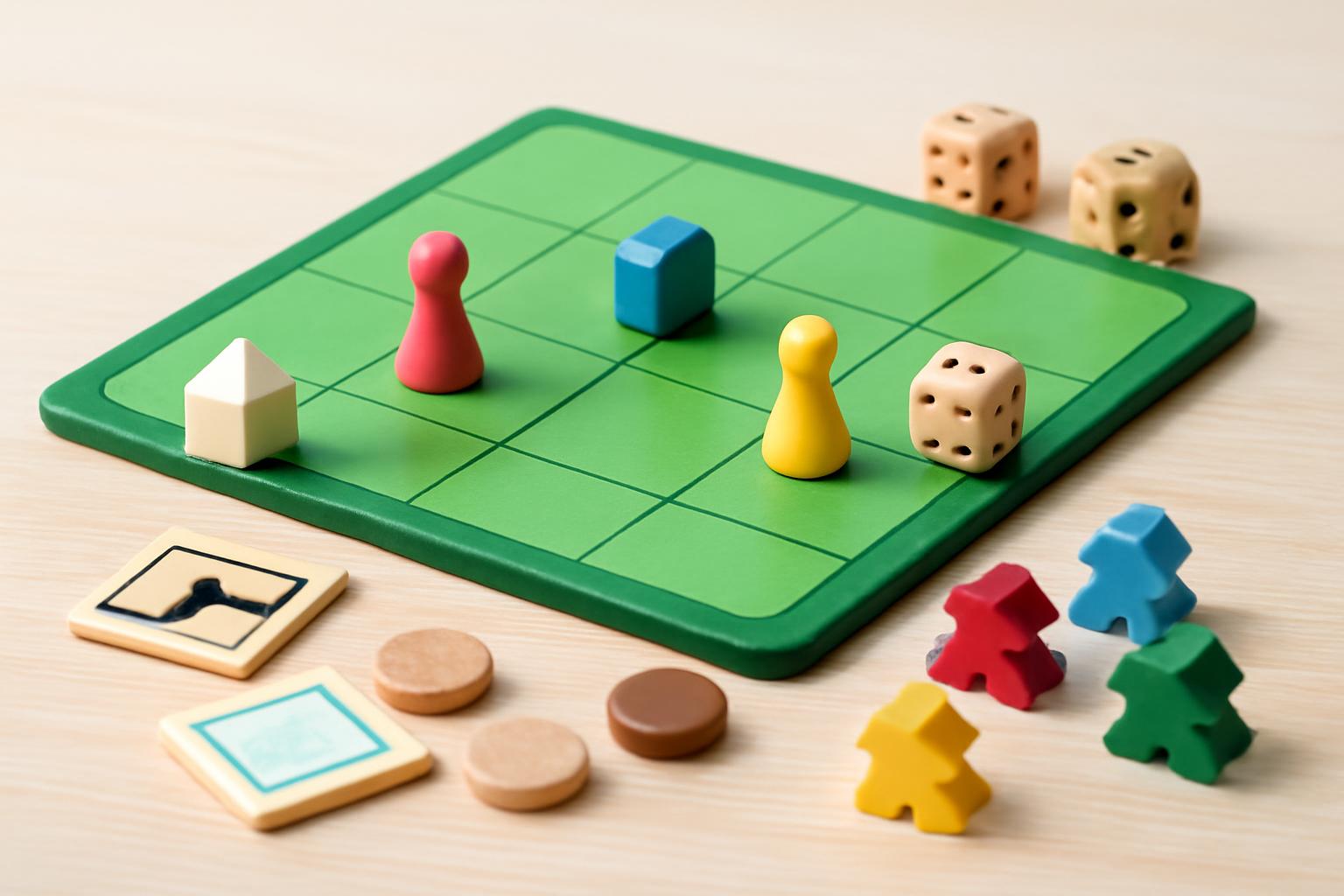
What to Know Before Planning a Day Around the Table
By Naomi Singh
Last reviewed: July 30, 2026. This is a preliminary planning overview based primarily on organizer-published information, not a finalized session schedule. Confirm current details before buying a badge or booking travel.
First, which board game day are you looking for?
“Board game day” can refer to several different things:
- Board Game Days 2026: a tabletop convention in Knoxville, Tennessee, with a designer-focused Thursday program and main-hall gaming from Friday through Sunday.
- Your own board game day: an informal gathering at a home, game store, cafe, library or other venue.
- International Tabletop Day: a related observance, not evidence of a separate formal holiday called “Board Game Day.”
- Board Game Day: a children’s picture book by Ambie Valdes, illustrated by Rachel Kremer.
Board Game Days is the name of a Knoxville organization that describes itself as a charitable nonprofit. It identifies its principal program as an annual tabletop convention and also publishes event rules and runs programs related to game design and prototype playtesting. Those descriptions come from the organization itself; its legal status, impact and educational outcomes have not been independently assessed here.
In everyday use, a board game day can simply mean an afternoon or evening devoted to tabletop play. It might involve friends tackling one strategy game, a family rotating through approachable titles or a public meetup with several tables. There is no single required date, format or number of participants.
International Tabletop Day is another possible search target. National Today reports that the observance takes place on the first Saturday of June and encompasses board games, card games and tabletop role-playing games. That third-party listing does not establish a separate, formally governed holiday named Board Game Day or require a personal gathering to occur on that date. See National Today’s International Tabletop Day listing.
The phrase is also the title of a rhyming children’s picture book. Board Game Day is written by Ambie Valdes and illustrated by Rachel Kremer. Its marketplace description follows a group of animal friends preparing for and holding a gaming day, and the book is listed for young children. Availability and retail formats can change. View the book listing and credits.
The primary focus below is the preliminary information published for Board Game Days 2026 in Knoxville. Practical advice for organizing a personal gathering follows the convention overview.
Board Game Days 2026 at a glance
The organizer’s registration listing schedules Board Game Days 2026 for October 15–18, 2026, in Knoxville, Tennessee. Although it is described as a four-day event, Thursday is the separate Design and Dine program; the main convention hall is listed as operating from Friday through Sunday.
| Day | Published program or hours |
|---|---|
| Thursday, October 15 | Design and Dine at RED Gallery in Knoxville’s Old City |
| Friday, October 16 | Main convention hall, noon–10 p.m. |
| Saturday, October 17 | Main convention hall, 10 a.m.–10 p.m. |
| Sunday, October 18 | Main convention hall, noon–6 p.m. |
The main convention venue is:
The Mill & Mine 227 W Depot Ave Knoxville, TN 37917
Design and Dine is listed separately at RED Gallery in Knoxville’s Old City. The event page contains conflicting references to its end time: one says 8 p.m. and another says 10 p.m. Do not build transportation, dinner or pickup plans around either time without obtaining confirmation from the organizer.
For parking, the organizer identifies spaces along West Depot Avenue and surrounding streets, plus a public lot under the I-40 overpass that it describes as approximately a three-to-five-minute walk from The Mill & Mine. That information does not guarantee an available space, an accessible route or suitability for a particular vehicle. The organizer’s current registration page should be checked for changes to the dates, venues, hall hours and parking notes, as well as badge prices, inclusions, reservation terms, deadlines and the final program. Review the organizer’s Board Game Days 2026 listing.
The available material does not establish whether advance registration is required, what a badge will cost, what refund terms will apply or whether particular age and accessibility arrangements will be offered. Verify those points before committing to nonrefundable travel.
A day-by-day way to approach the convention
The outline below is a planning framework derived from the published hours. It is not an official itinerary, and it does not name individual games, tournaments or RPG sessions because a finalized detailed program is not established here.
Thursday: treat Design and Dine as a specialized opening. This is the designer-oriented portion of the event rather than a full day in the main convention hall. It may be relevant to designers, prospective playtesters and attendees interested in works in progress. Because the published end time is inconsistent, verify the complete timing before making evening plans.
Friday: orient yourself before committing the full day. Friday is the first listed main-hall day, beginning at noon. Allow time to collect a badge, understand the room layout, inspect the game library and find out how scheduled activities, open gaming and table reservations operate.
A schedule that looks spacious on paper can tighten quickly once registration, setup, rules teaching and a complete game are included. Leave gaps instead of assuming that every hour of hall access will become an hour of play.
Saturday: combine priorities with flexible play. Saturday has the longest published hall window, from 10 a.m. to 10 p.m. It is therefore the most practical day for combining scheduled activities with open gaming, subject to the final program and table availability.
Avoid filling every hour. Longer games can exceed their estimates, and even short sessions require setup and transition time. Meals, breaks and conversations may also take longer in a busy hall. Choose one or two priorities and treat additional activities as options rather than obligations.
Sunday: finish selectively. The listed noon-to-6 p.m. window makes Sunday a shorter closing day. It may suit a remaining scheduled activity, a manageable library game or open play that can finish comfortably before the hall closes.
Before starting a long game, ask whether the expected duration includes setup and teaching. Leave time to return borrowed materials, collect personal belongings and pack up without pressuring other players to rush.
Across all four dates, flexibility is more useful than a minute-by-minute itinerary. Prepare a short list of priorities, a second list of alternatives and at least one period with no commitment.
What the organizers say attendees can do
The convention listing advertises a mixture of structured and unstructured tabletop activity:
- Open gaming
- Scheduled events with reservable seats
- A game library
- Dedicated RPG tables and one-shot sessions
- Two social-deduction rooms
- Play-to-win titles
- Prize drawings
- Prototype playtesting
- Open-gaming table reservations
Attendees are invited to reserve seats at scheduled events and may be able to reserve open-gaming tables through the event platform. Availability, eligibility and reservation terms should be checked when booking.
The game library is an advertised amenity that may reduce the number of boxes an attendee needs to bring. It is not confirmation that a particular title, edition, expansion or player count will be available. A desired game may be absent or already in use.
The organizer also advertises a free game for each of the first 400 attendees who collects a badge at registration. That condition matters: advance signup is not stated to secure a game, and the offer is not represented as a gift for every attendee. Other figures—including anticipated attendance, seating and table counts—are organizer projections rather than independently verified results. The event listing provides the advertised activities, reservation options and giveaway terms.
A practical way to divide convention time is:
- Committed time: a scheduled activity or reserved table you intend to attend.
- Flexible gaming time: open play, library browsing or joining a table with space.
- Transition time: registration, food, breaks, teaching and movement between activities.
This avoids a common planning error: treating all published hall hours as uninterrupted playing time.
Participation paths for newcomers, designers and RPG game masters
General attendees
Review the scheduled events before arriving, then protect some open-gaming time. This balances activities with defined start times against the freedom to respond to table availability or invitations.
Do not assume that advance registration is either mandatory or unnecessary. The supplied information does not resolve that question.
If bringing personal games, choose selectively. A compact game that you can explain clearly may be more useful than several heavy boxes. Mark ownership discreetly, count important components before leaving and confirm any current venue rules governing outside games.
Solo attendees and beginners
Scheduled tables can provide a clearer starting point than walking into a hall without a plan. Open gaming offers more flexibility, while the advertised library may allow newcomers to explore without carrying a personal collection.
None of those features promises formal matchmaking, beginner instruction or an immediately available seat. A solo attendee can improve the chances of finding a suitable game by:
- Reviewing event descriptions in advance
- Arriving before a scheduled start
- Being candid about experience level
- Asking how long the game is expected to take
- Confirming whether the table is teaching or already playing
- Keeping a backup activity in mind
A beginner does not need to pretend to know a game. A short question about complexity, teaching time or the expected finish can prevent a poor fit for everyone at the table.
Designers
According to the organizer’s listing, designers are invited to use open-gaming tables while actively seeking players or playing their games. They may also reserve a specific open-gaming table and are encouraged to participate in Design and Dine.
A practical playtesting kit might include:
- The prototype and necessary components
- A concise explanation of the game
- Setup notes
- A way to record feedback
- Replacement materials for fragile pieces
Keep the introduction short enough for a potential player to understand the expected duration, stage of development and type of feedback being requested. Consult the current listing for table reservations, participation procedures and deadlines; a general invitation does not override booking or venue rules.
RPG game masters
The organizer invites RPG game masters to submit one-shot sessions for dedicated RPG tables. It also advertises the possibility of a badge discount for game masters who make contact, but the amount and eligibility requirements are not supplied.
Prepare a proposal around the information players need most:
- Game system and required familiarity
- Expected duration
- Intended experience level
- Character requirements
- Relevant content considerations
Confirm the submission format, approval process, deadlines and discount terms directly through the event platform or organizer.
These participation paths should not be read as proof of family suitability, child supervision, age rules or accessibility accommodations. Anyone who needs those details should obtain an answer before purchasing a badge or making travel arrangements.
Conduct, safety and prohibited items
Board Game Days publishes an anti-harassment policy that applies to people involved in operating or attending its events. The policy prohibits unwelcome verbal, physical, visual and other conduct. It says concerns may be reported to on-site staff or by email, and that violations may lead to removal without a refund. The displayed reporting address and one underlying email link do not match, so this article does not reproduce a definitive address. Before the event, verify the current reporting channel; on site, ask an identifiable staff member how to report a concern. Read the published anti-harassment policy.
The event’s published prohibitions include:
- Alcohol
- Smoking
- Vaping
- Illicit substances
- Drones
- Helium balloons
- Skateboards
- Roller skates
- Non-mobility scooters
- Pets other than service animals
These are rules for the Knoxville event, not universal rules for private homes, cafes, pubs or unrelated conventions. In particular, alcohol may be available at some adult venues, but the Board Game Days rules expressly prohibit it. This summary is not exhaustive, so review the complete current code before arriving. Check the current Board Game Days code of conduct.
How to host your own board game day
If you meant a gathering of your own, begin with its purpose rather than a shopping list. Decide whether it will be:
- Focused strategy play, with one substantial game as the priority
- A relaxed social gathering, where conversation matters as much as play
- A family event, with games selected for the participants present
- An open community meetup, where guests may not know one another
- A recurring club night, where consistency and welcoming newcomers matter
That choice shapes the guest list, location, game selection, schedule and refreshments.
Match the guest list to the format
There is no universally ideal attendance. The Tabletop Family describes four to six total participants as its preferred range for concentrated gameplay, not as a rule. That range can work when the selected games support it and everyone expects to stay for the session. A party gathering or public meetup may need more people, while a specific strategy game may require fewer. The Tabletop Family explains its suggested group size and game flow.
Before inviting people, ask:
- How many players do the shortlisted games support well?
- Will everyone arrive and leave at roughly the same time?
- Are the guests experienced players, newcomers or a mixture?
- Does anyone prefer cooperative play or dislike direct conflict?
- Will the group stay together or divide among tables?
- Is socializing the main purpose, or is finishing a particular game the priority?
For an open event, plan around usable tables rather than head count alone. A room may hold many people but still be unsuitable if the games, table sizes and available seats do not align.
Select and learn a limited set of games
Choose a small menu before guests arrive. Learn the rules well enough to explain the objective, turn structure and end condition without reading the entire rulebook aloud. Prepare at least one backup in case attendance changes or the first choice proves unsuitable.
Evaluate each game using six factors:
| Factor | What to ask |
|---|---|
| Player count | Does it work with the number actually expected? |
| Experience | Can newcomers follow the first turn after a concise explanation? |
| Complexity | Does the rules burden fit the group’s interest and energy? |
| Time | Can setup, teaching and play finish within the available window? |
| Noise | Does play require quiet discussion or private information? |
| Flexibility | Can it accommodate late arrivals, early departures or changing tables? |
If a game is new to the host, set it up and play several sample turns beforehand. Identify likely rules questions and confirm that essential components are present.
Give the day a flexible rhythm
An adaptable sequence is:
- Quick opener: a short game that can begin as the group settles in.
- One or two main games: the experiences requiring the most attention.
- Lighter closer: a game that is easy to end or works with a smaller remaining group.
For newcomers, a game lasting roughly 45 to 60 minutes can be useful, while a main game of about 90 minutes may suit some groups. These are source-derived suggestions, not thresholds. A familiar two-hour game can run more smoothly than an unfamiliar 45-minute one, and some gatherings are intentionally organized around much longer play.
Always include setup and teaching in the schedule. A duration printed on a box may not account for a first play, interruptions or rules questions.
Possible formats include:
Two-hour gathering
- Arrival period
- Short opener
- Main game
- Brief closer or conversation
- Pack-up time
Half-day gathering
- Arrivals and refreshments
- Short opener
- Main game
- Break
- A second medium game or several lighter options
- Cleanup
Full-day gathering
- Defined arrival window
- Morning opener or medium game
- Meal break away from components
- Longer afternoon game
- Flexible early-evening play
- Planned stopping and cleanup time
These are frameworks, not fixed timetables. If players are enjoying one game and no deadline requires a change, forcing a transition may be counterproductive.
Prepare the room
Clear the playing surface before guests arrive. Check that the table can hold boards, cards, player areas and tokens without pushing drinks against the edge. Provide sufficient seating and lighting, including enough contrast to distinguish text, colors and small components.
Keep background music low. Negotiation, hidden information and detailed teaching become difficult when players cannot hear one another. Allow time for conversation, but establish an approximate start so the gathering does not remain indefinitely in arrival mode.
For a recurring community event, a consistent schedule can help. Luke Filipiak’s account of organizing a monthly gathering recommends sharing responsibilities among three or four organizers, promoting each occurrence through repeatable channels and bringing games the organizers can teach confidently. This is experience-based advice, not a universal staffing formula. Love Thy Nerd describes that recurring-event model.
Plan food and drinks around the components
Choose low-mess finger foods and provide ample nonalcoholic drinks. Use coasters or covered containers where practical. Keep greasy, powdery and saucy foods away from cards, boards and shared pieces.
A separate food surface is preferable when space allows. If food must share the game table, define a drink zone and provide napkins. Alcohol is not necessary for a board game day; whether it is appropriate depends on the audience, venue and applicable rules.
Prepare for predictable disruptions
A useful backup plan is better than a long list of prohibitions.
- Late arrival: keep a short activity available or explain when the next game begins.
- Early departure: schedule the longest game first or choose a closer that supports different player counts.
- Rules dispute: assign one person to check the rulebook and record unresolved questions rather than debating indefinitely.
- Spill: move components first, blot wet cards rather than rubbing them and keep paper towels nearby.
- Missing piece: use a temporary token and make a note for the owner.
- Unsuitable game: stop and move to the backup without treating the selection as a failure.
- Uneven experience: teach patiently without giving newcomers strategy advice on every turn.
- Unexpected attendance: divide into smaller tables rather than exceeding a game’s intended player count.
The goal is not to eliminate every interruption. It is to prevent one surprise from ending the gathering.
Choosing a home, cafe, shop or community venue
The right venue depends on the desired level of control, capacity, service and public access.
Private home
A home offers control over timing, noise, food and game storage. It can work well for invited groups, longer sessions and games with many components.
Possible constraints include limited parking, stairs, household interruptions, insufficient seating and the privacy implications of sharing a residential address. Confirm that the host is comfortable with the full guest list before encouraging additions.
Library, community center or church
These spaces may suit larger or more open gatherings when they provide enough tables and predictable room hours. Permission, booking rules, food restrictions and supervision expectations must be confirmed directly.
Do not assume that a public-facing building automatically permits an open gaming event. Ask about capacity, setup and cleanup time, storage, noise, age rules, cancellation terms and shared-room arrangements.
Local game store
A game store may already have suitable tables and an audience interested in tabletop play. It may also run its own events, charge for space or reserve tables for organized programs.
Contact the store before announcing the gathering. Clarify whether outside games are welcome, whether purchases are expected, how long tables can be used and what happens if another store event needs the space.
Board game cafe
A board game cafe may provide a library, staff instruction, food, drinks, table fees, entry fees, rentals or reservations. These services vary by business, so the venue category alone does not establish what is included. A commercial cafe’s explanation illustrates possible operating models but should not be treated as a universal standard. See an overview of common board game cafe features.
Ask whether:
- Library use is covered by admission
- A minimum purchase applies
- Reservations are available or required
- Staff will be available to teach
- Tables are large enough for the intended games
- Outside games are permitted
Coffee shop, pub or brewery
An ordinary coffee shop may work for a small, quiet group if management permits it and the gathering does not occupy scarce tables unfairly. Pubs and breweries may offer more evening space, but hosts should check age restrictions, alcohol policies, table service and conflicts with live entertainment.
Ask permission instead of arriving with a group unannounced. Follow purchase and tipping expectations, and do not bring outside food or drinks unless explicitly permitted. The gathering should benefit rather than burden the business.
Alcohol should remain optional. Choose games and expectations for the actual participants, and consider whether a busy service period, crowded room or live performance will make teaching impractical.
Convention space
Convention space may be appropriate when attendance, programming or equipment needs exceed what an informal venue can support. It also creates additional logistical demands, potentially including contracts, costs, staffing, registration, conduct procedures, scheduling and venue-specific insurance requirements.
That infrastructure is usually unnecessary for a casual gathering but may become relevant for a large public event.
Inspect before committing
Assess a prospective venue with this checklist:
- Do you have explicit permission to organize gaming there?
- Are the tables large and stable enough?
- Is there sufficient seating at each table?
- What is the room’s actual capacity?
- Is the lighting adequate for text, cards and color differences?
- Can players hear teaching and conversation?
- How private or exposed is the gaming area?
- What are the opening, closing, setup and cleanup hours?
- How busy is ordinary customer traffic?
- Are outside food and drinks permitted?
- Will live music or another event compete for space?
- What are the reservation and cancellation terms?
- Is there a minimum purchase?
- What costs will hosts or attendees pay?
Verify accessibility, age suitability, dietary options, transit, parking and accommodation needs directly with the venue. Those conditions cannot be inferred from whether a place is called a library, cafe, store or community center.
Assign a public-event host
A public board game day benefits from someone responsible for arrivals. That host can:
- Welcome people and explain the format
- Identify tables with open seats
- Introduce solo arrivals to suitable groups
- Announce games seeking players
- Find someone able to teach
- Track approximate start times
- Redirect people when a table fills
- Explain venue expectations
Without this role, regular attendees may form groups naturally while newcomers remain uncertain about where they can join. The host does not need to control every table; the purpose is to reduce the friction between entering the room and beginning a game.
Protect games without making the event inhospitable
Place drinks away from active boards and use coasters. Ask players to handle components with clean hands and avoid touching cards while eating greasy or saucy food. Keep small pieces organized, particularly in busy public spaces, and count borrowed components during cleanup.
Treat games owned by other attendees more carefully than your own. Ask before bending cards, writing on materials, combining pieces from different boxes or using an app that changes the experience. Experienced public-event guidance also recommends checking table size and lighting in advance, supporting the host business and assigning someone to welcome participants. Review practical cafe and pub gaming considerations.
The compact decision is:
- Choose a home for control, privacy and longer invited sessions.
- Choose a dedicated game venue when a library, reservations or staff support would help.
- Choose a community venue for larger or more open attendance.
- Choose a cafe, pub or brewery only after confirming permission, costs, purchase expectations, noise and alcohol rules.
- Choose convention space when scale and structured programming justify the additional logistics.
In every case, verified local rules matter more than assumptions about the venue type.
Frequently asked questions
Is Board Game Day an official holiday?
The available evidence does not establish a formally recognized holiday specifically called Board Game Day. The phrase may refer to a personal gathering, the Knoxville convention, the children’s book or a related observance.
National Today lists International Tabletop Day on the first Saturday of June, but that is a separate name published by a third-party holiday site. It does not make every generically described board game day an official holiday.
When and where is Board Game Days 2026?
The organizer lists the event for October 15–18, 2026, in Knoxville, Tennessee. Thursday’s Design and Dine program is listed at RED Gallery in the Old City, while the Friday-through-Sunday main convention is listed at The Mill & Mine, 227 W Depot Ave.
The complete cited dates, hall hours and venue notes appear in the Board Game Days 2026 at-a-glance section. Confirm them before travel because the event is still in the advance-planning stage.
Does every Board Game Days attendee receive a free game?
No. The organizer’s stated offer is limited to the first 400 attendees who collect a badge at registration. It does not say that advance registration alone secures the giveaway or that every attendee will receive one. The cited offer and its condition are summarized under what the organizers say attendees can do.
How many people should I invite to my own board game day?
Invite the number that fits the purpose, venue and games. A focused strategy session might include only the player count supported by one selected game. A social gathering can be larger, while an open community event may require several tables and multiple hosts.
Four to six total participants is one experienced hosting publication’s preferred range for concentrated gameplay, not a universal standard. Consider seating, player counts, experience levels, arrival times and whether the group will divide among tables.
What is the children’s book “Board Game Day”?
Board Game Day is a rhyming children’s picture book written by Ambie Valdes and illustrated by Rachel Kremer. Its marketplace description follows animal friends as they prepare for and host a board-game day, and it is listed as intended for young children.
Final planning note
Prospective Knoxville attendees can use the published dates, venues, hall hours, activity overview and conduct rules as a starting point. Before paying for a badge or booking travel, confirm registration requirements, prices, inclusions, deadlines, the final program, accessibility arrangements, age policies and the unresolved Design and Dine timing with the organizer.
Anyone planning a board game day of their own should begin with a clear purpose, select a suitable venue and a limited menu of teachable games, leave room for changes and protect both the players’ comfort and the games on the table.